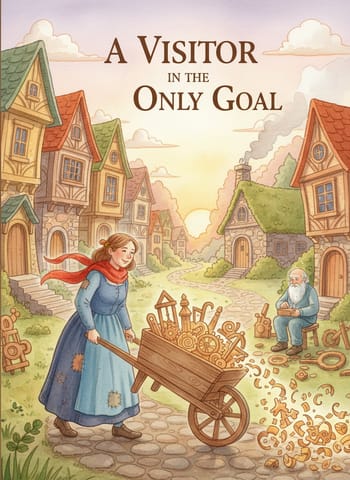
A Visitor in the Only Goal
قصة إنجليزية مجانية بالمستوى A2 لمتعلمي اللغات، يمكن قراءتها على الإنترنت بلغات عددها 8، مع إمكانية الاستماع إليها عبر تطبيق Storyteller المجاني.
Gudrun pushes a mystery wheelbarrow from house to house until she finds the quiet man who made the wood inside it.
انتهى المقطع التجريبي! استمع إلى القصة كاملة في تطبيق Storyteller المجاني. حمّل التطبيق
الصوت غير متاح الآن.
The village pitch has one goal. The other goal is gone. Nobody remembers when it went. The pitch is a long strip of grass behind the school. It leans a little to the left. Every game here is played at the same end.
ملعب القرية فيه مرمى واحد. أما المرمى الآخر فقد اختفى. لا أحد يتذكر متى. الملعب شريط طويل من العشب خلف المدرسة. وهو يميل قليلًا إلى اليسار. وكل مباراة هنا تُلعب عند الطرف نفسه.
Gudrun keeps the pitch. Nobody pays her, and nobody asked her to. She cuts the grass on Saturdays. She marks the lines with white powder. On Sunday mornings she walks the grass alone and picks up stones.
تعتني غودرون بالملعب. لا أحد يدفع لها، ولا أحد طلب منها ذلك. تجز العشب أيام السبت. وتخط الخطوط بمسحوق أبيض. وفي صباح أيام الأحد تمشي على العشب وحدها وتلتقط الحجارة.
On Thursday, she comes early to fix a hole in the grass. It is just after six. The air is cool and the grass is wet. She stops at the edge of the pitch.
يوم الخميس تأتي مبكرًا لتصلح حفرة في العشب. الساعة تجاوزت السادسة بقليل. الهواء بارد والعشب مبلل. تتوقف عند حافة الملعب.
A wheelbarrow stands inside the goal.
داخل المرمى عربة يد.
It is green, with a bent handle. The wheel looks new. A rope holds a sheet over the load. Nobody is near it. There are no footprints in the wet grass, except her own. A thin line of wheel marks runs back to the lane.
هي خضراء، ومقبضها معوج. وعجلتها تبدو جديدة. وحبل يشد غطاءً فوق الحمولة. لا أحد قريب منها. ولا آثار أقدام في العشب المبلل سوى آثار قدميها. وخط رفيع من آثار العجلة يعود إلى الزقاق.
Gudrun walks around the wheelbarrow twice. Then she lifts the sheet. Under it lie three long pieces of pale wood. They are smooth and straight. Someone worked on them for hours.
تمشي غودرون حول العربة مرتين. ثم ترفع الغطاء. وتحته ثلاث قطع طويلة من الخشب الفاتح. وهي ناعمة ومستقيمة. عمل عليها أحدهم ساعات.
"Somebody forgot you," she says to the wheelbarrow.
«نسيكِ أحدهم»، تقول للعربة.
She cannot leave it there. The children come at four to play. They will climb on it, or push it down the hill. The wood looks too good for that. So Gudrun takes the handles. The load is heavier than it looks. She leans forward and pushes it up the lane.
لا تستطيع أن تتركها هناك. سيأتي الأطفال في الرابعة ليلعبوا. وسيتسلقونها، أو يدفعونها إلى أسفل التل. والخشب يبدو أجود من أن يُترك لذلك. فتمسك غودرون بالمقبضين. الحمولة أثقل مما تبدو. تنحني إلى الأمام وتدفعها صعودًا في الزقاق.
The first house on the lane belongs to a farmer. He stands at his gate with a bucket of seed. A few hens walk around his boots.
البيت الأول في الزقاق يخص مزارعًا. يقف عند بوابته ومعه دلو من البذور. وتمشي حول حذائه دجاجات قليلة.
"Is this yours?" Gudrun asks.
«هل هذه لك؟» تسأل غودرون.
The farmer puts down the bucket. He looks at the wheelbarrow for a long time. He taps the wheel with one finger.
يضع المزارع الدلو. ينظر إلى العربة وقتًا طويلًا. ينقر العجلة بإصبع واحد.
"No," he says. "Mine has a flat wheel and a hole in the floor. This one is too nice for a farm."
«لا»، يقول. «عجلة عربتي مفرغة من الهواء وفي قاعها ثقب. وهذه أجمل من أن تكون لمزرعة.»
He lifts the sheet and whistles at the wood. "That is not a farm job. That is a careful job. Ask the mason."
يرفع الغطاء ويصفر إعجابًا بالخشب. «هذا ليس عمل مزرعة. هذا عمل متقن. اسألي البنّاء.»
"Where is he?"
«أين هو؟»
"Down by the church. I will walk with you. I want to see his face."
«هناك عند الكنيسة. سأمشي معك. أريد أن أرى وجهه.»
So the farmer leaves his bucket. He takes one handle, and Gudrun takes the other. They go down the lane together. The wheel makes a soft sound on the stones. A dog follows them for a while and then gives up.
فيترك المزارع دلوه. يمسك أحد المقبضين، وتمسك غودرون بالآخر. ينزلان الزقاق معًا. تصدر العجلة صوتًا ناعمًا على الحجارة. يتبعهما كلب لبعض الوقت ثم يستسلم.
The mason works in a yard behind the church. He cuts a stone step when they arrive. Dust covers his arms. He stops and takes off his gloves.
يعمل البنّاء في ساحة خلف الكنيسة. يقطع درجة حجرية عندما يصلان. الغبار يغطي ذراعيه. يتوقف ويخلع قفازيه.
"A new wheelbarrow," he says. "Very nice."
«عربة يد جديدة»، يقول. «جميلة جدًا.»
He walks around it as Gudrun did. "But it is not mine. I only use iron ones. Wood and green paint are not my kind of work."
يمشي حولها كما فعلت غودرون. «لكنها ليست لي. أنا لا أستخدم إلا العربات الحديدية. الخشب والطلاء الأخضر ليسا من عملي.»
He touches one of the long pieces. "Somebody cut this at home, with a hand saw. Look at the ends. They are square, but not too square."
يلمس إحدى القطع الطويلة. «قطعها أحدهم في بيته بمنشار يدوي. انظري إلى الأطراف. هي قائمة الزوايا، لكن ليس أكثر من اللازم.»
"What does that mean?" Gudrun says.
«ماذا يعني ذلك؟» تقول غودرون.
"It means somebody was patient," the mason says. "And somebody who is patient with wood is usually patient with children. Try the school. They have a man who fixes everything."
«يعني أن أحدهم كان صبورًا»، يقول البنّاء. «ومن يصبر على الخشب يصبر عادة على الأطفال. جرّبي المدرسة. عندهم رجل يصلح كل شيء.»
Gudrun knows who he means. She stops walking.
تعرف غودرون من يقصد. تتوقف عن المشي.
"Come," says the farmer. "It is not far."
«تعالي»، يقول المزارع. «ليس بعيدًا.»
The three of them go back toward the school. The sun is higher now. The school windows shine. A bell rings for the early class. At the side door, a man fixes the door. He wears a blue coat. His name is Alois. He keeps the school and its garden. He is also Gudrun's neighbor. Every day he says hello to her, very loudly, and nothing more.
يعود الثلاثة نحو المدرسة. الشمس أعلى الآن. ونوافذ المدرسة تلمع. يرن جرس للحصة المبكرة. وعند الباب الجانبي رجل يصلح الباب. يرتدي معطفًا أزرق. اسمه ألويس. يعتني بالمدرسة وحديقتها. وهو جار غودرون أيضًا. كل يوم يقول لها مرحبًا بصوت عالٍ جدًا، ولا شيء غير ذلك.
Alois sees the wheelbarrow and goes very still. A small tool hangs from his hand.
يرى ألويس العربة فيسكن تمامًا. وتتدلى أداة صغيرة من يده.
"Is it yours?" asks the farmer.
«هل هي لك؟» يسأل المزارع.
"It is mine," Alois says slowly.
«هي لي»، يقول ألويس ببطء.
"Then why is it standing in the only goal?" Gudrun asks.
«إذًا لماذا هي واقفة في المرمى الوحيد؟» تسأل غودرون.
Alois looks at his boots. He tries to speak twice and stops. At last he laughs, a little shy.
ينظر ألويس إلى حذائه. يحاول أن يتكلم مرتين ويتوقف. وأخيرًا يضحك ضحكة خجولة قليلًا.
"Nobody comes to that goal at night," he says. "I thought it was the safest place in the village."
«لا أحد يأتي إلى ذلك المرمى ليلًا»، يقول. «ظننته أأمن مكان في القرية.»
The farmer laughs so hard that he must sit on the step. Even the mason smiles.
يضحك المزارع حتى إنه يضطر إلى الجلوس على الدرجة. حتى البنّاء يبتسم.
"You made these?" Gudrun asks. She lifts the sheet once more.
«أنت صنعت هذه؟» تسأل غودرون. ترفع الغطاء مرة أخرى.
"I did. From the old tree behind the school. It fell in the spring." Alois rubs the back of his neck. "I cut it, and dried it, and made it smooth for months. Every evening, after work. I wanted to bring it on Saturday, before you came. I wanted to finish it first."
«نعم. من الشجرة القديمة خلف المدرسة. سقطت في الربيع.» يفرك ألويس مؤخرة عنقه. «قطعتها، وجففتها، وصقلتها شهورًا. كل مساء بعد العمل. أردت أن أحضرها يوم السبت قبل أن تأتي. أردت أن أنتهي منها أولًا.»
"Done?"
«تنتهي من ماذا؟»
"A second goal," he says. "Everybody always shoots at the same end. The game only goes one way. I thought it needed two."
«هدف ثانٍ»، يقول. «الجميع يسددون دائمًا نحو الطرف نفسه. واللعبة تسير في اتجاه واحد فقط. ظننت أنها تحتاج إلى اثنين.»
Gudrun says nothing. She looks at the wood. Then she looks at the hands that shaped it. They are rough and cracked. They are the hands of a person who works and says little.
لا تقول غودرون شيئًا. تنظر إلى الخشب. ثم تنظر إلى اليدين اللتين شكّلتاه. إنهما خشنتان ومشققتان. هما يدا شخص يعمل كثيرًا ويتكلم قليلًا.
"I tried to tell you," Alois says. "Many times. Every time, I only said hello."
«حاولت أن أخبرك»، يقول ألويس. «مرارًا. وفي كل مرة لم أقل إلا مرحبًا.»
"You said hello very loudly," Gudrun says.
«قلتَ مرحبًا بصوت عالٍ جدًا»، تقول غودرون.
"Yes. I am sorry about that."
«نعم. أنا آسف على ذلك.»
The farmer clears his throat. "We have somewhere else to be," he says. Then he walks back toward his hens. The mason follows him, looking at the sky.
يتنحنح المزارع. «عندنا ما نفعله في مكان آخر»، يقول. ثم يمشي عائدًا نحو دجاجاته. ويتبعه البنّاء وهو ينظر إلى السماء.
Alois and Gudrun stand by the side door. A child's voice comes from the classroom. Somebody counts out loud.
يقف ألويس وغودرون عند الباب الجانبي. يأتي صوت طفل من الفصل. يعدّ أحدهم بصوت عالٍ.
"We need a rope and a spade," Gudrun says at last.
«نحتاج إلى حبل ومجرفة»، تقول غودرون أخيرًا.
"I have both."
«عندي الاثنان.»
"And a measuring line."
«وخيط قياس.»
"I have that too."
«وعندي ذلك أيضًا.»
"Then bring them," she says. "I know where the other end of the pitch is."
«إذًا أحضرهما»، تقول. «أنا أعرف أين الطرف الآخر من الملعب.»
They push the wheelbarrow together, one on each handle. It is easier now that there are two of them. They go back down the lane. They pass the church and reach the grass.
يدفعان العربة معًا، كل منهما عند مقبض. الأمر أسهل الآن لأنهما اثنان. يعودان في الزقاق. يمران بالكنيسة ويصلان إلى العشب.
All morning they work at the far end. Gudrun marks the ground with white powder. Alois digs two deep holes. They set the pale posts in the holes. They tie the crossbar with careful knots. By noon the second goal stands against the sky. It is straight, though the pitch leans to the left.
طوال الصباح يعملان عند الطرف البعيد. تخط غودرون الأرض بمسحوق أبيض. ويحفر ألويس حفرتين عميقتين. يثبتان العمودين الفاتحين في الحفرتين. ويربطان العارضة بعقد متقنة. وعند الظهر يقف المرمى الثاني في مواجهة السماء. وهو مستقيم، مع أن الملعب يميل إلى اليسار.
In the evening, the two of them sit on the grass. The sun is low, and the whole pitch turns gold. The old goal stands at one end. The new one stands at the other. On the halfway line, the green wheelbarrow rests with its wheel still.
في المساء يجلس الاثنان على العشب. الشمس منخفضة، والملعب كله يتحول إلى لون ذهبي. المرمى القديم يقف عند طرف. والجديد عند الطرف الآخر. وعلى خط المنتصف ترتاح العربة الخضراء وعجلتها ساكنة.