The First Day Badge on Day Thirty
قصة إنجليزية مجانية بالمستوى B2 لمتعلمي اللغات، يمكن قراءتها على الإنترنت بلغات عددها 8، مع إمكانية الاستماع إليها عبر تطبيق Storyteller المجاني.
A new site clerk follows three small clues to find out why one man keeps wearing a badge meant for newcomers.
انتهى المقطع التجريبي! استمع إلى القصة كاملة في تطبيق Storyteller المجاني. حمّل التطبيق
الصوت غير متاح الآن.
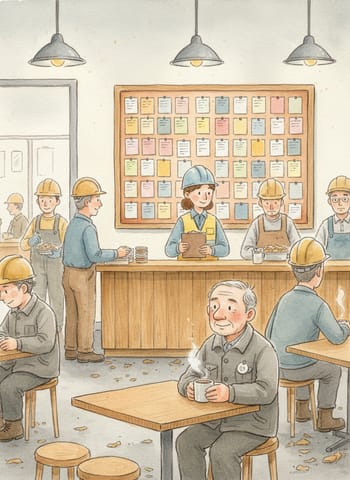
The canteen on the building site is a long metal box with a steel counter at one end and forty plastic chairs at the other. Neil starts work there at half past six on a Monday, wearing boots that are still too clean. He is the new site clerk, and his first job, according to the manager, is to learn how the place breathes.
المقصف في موقع البناء صندوق معدني طويل، في أحد طرفيه منضدة فولاذية وفي الطرف الآخر أربعون كرسيًا بلاستيكيًا. يبدأ نيل العمل هناك في السادسة والنصف من صباح أحد أيام الاثنين، منتعلًا حذاءً عالي الساق ما زال أنظف مما ينبغي. إنه كاتب الموقع الجديد، وأول مهمة له، بحسب المدير، أن يتعلم كيف يتنفس هذا المكان.
"Start with the canteen," the manager says. "If you understand the canteen, you understand the site."
«ابدأ بالمقصف»، يقول المدير. «إذا فهمت المقصف فهمت الموقع.»
Adel, who runs the counter, hands him a mug of black coffee before he has even asked. She is small and quick, with a pencil behind one ear and a laminated menu she has not changed in years. She watches Neil look around the room, and then she points at the wall.
تناوله أديل، التي تدير المنضدة، كوبًا من القهوة السوداء قبل أن يطلبها. هي صغيرة الحجم سريعة الحركة، وخلف إحدى أذنيها قلم رصاص، وعندها قائمة طعام مغلّفة بالبلاستيك لم تغيّرها منذ سنوات. تراقب نيل وهو ينظر في أنحاء الغرفة، ثم تشير إلى الحائط.
"Tell me what you see," she says.
«أخبرني ماذا ترى»، تقول.
Neil sees a notice about hard hats, a calendar from a concrete supplier, and a pinboard full of paper. On the pinboard hangs a small plastic badge on a string. It says FIRST DAY in capital letters, with a blank space where a name should be.
يرى نيل إعلانًا عن خوذات السلامة، وتقويمًا من مورّد للخرسانة، ولوحة تثبيت مليئة بالأوراق. وعلى اللوحة تتدلى شارة بلاستيكية صغيرة معلّقة بخيط. مكتوب عليها «اليوم الأول» بحروف كبيرة، وفيها فراغ حيث ينبغي أن يكون اسم.
"It's a badge for new workers," he says. "They give them out on the first day, so everyone knows to be patient."
«إنها شارة للعمال الجدد»، يقول. «يعطونها لهم في اليوم الأول، ليعرف الجميع أن يتحلوا بالصبر معهم.»
"Correct," Adel says. "Now count how many new workers have started here this month."
«صحيح»، تقول أديل. «والآن عُدّ كم عاملًا جديدًا بدأ العمل هنا هذا الشهر.»
He asks the manager's assistant, who checks a spreadsheet. The answer comes back in ten minutes. No one has joined the site since the start of the month, and the last new face arrived seven weeks ago. Neil returns to the counter with a puzzled expression.
يسأل مساعد المدير، الذي يراجع جدولًا إلكترونيًا. ويأتي الجواب بعد عشر دقائق. لم ينضم أحد إلى الموقع منذ بداية الشهر، وآخر وجه جديد وصل قبل سبعة أسابيع. يعود نيل إلى المنضدة وقد ارتسمت الحيرة على وجهه.
"So why does the badge leave its hook every single day?" Adel asks, pleased. "Look at it at lunchtime. Look at it at the end of the day. You will see."
«إذًا لماذا تغادر الشارة خطافها كل يوم؟» تسأل أديل مسرورة. «انظر إليها وقت الغداء. وانظر إليها في آخر اليوم. وسترى.»
That is the puzzle. Adel has been watching it for a month, and she has failed to solve it. She is always behind the counter when the interesting part happens. Neil, who spends his days between the office and the canteen, is the first person with the freedom to follow it.
هذا هو اللغز. وقد ظلت أديل تراقبه شهرًا، وفشلت في حله. فهي دائمًا خلف المنضدة حين يحدث الجزء المثير. أما نيل، الذي يقضي أيامه بين المكتب والمقصف، فهو أول شخص تتاح له حرية متابعته.
At noon the canteen fills with the noise of boots and cutlery. Neil sits at a corner table with a notebook and writes the first clue. The badge is not on its hook. It was taken at some point during the morning, and it has not come back yet.
عند الظهر يمتلئ المقصف بضجيج الأحذية والملاعق. يجلس نيل إلى طاولة في الزاوية ومعه دفتر ملاحظات، ويكتب الدليل الأول. الشارة ليست على خطافها. أُخذت في وقت ما خلال الصباح، ولم تعد بعد.
At twelve fifteen a tall man in a spotless yellow vest walks to the counter. He wears the badge around his neck, and he does not seem to notice that the men at the next table are smiling at him. He takes his tray, receives a bigger portion of stew than anybody else, and sits alone by the window. Neil writes the second clue. Everyone is being gentle with him.
في الثانية عشرة والربع يمشي رجل طويل يرتدي سترة صفراء ناصعة نحو المنضدة. يضع الشارة حول عنقه، ولا يبدو أنه يلاحظ أن الرجال على الطاولة المجاورة يبتسمون له. يأخذ صينيته، ويحصل على حصة يخنة أكبر من أي أحد آخر، ويجلس وحده قرب النافذة. يكتب نيل الدليل الثاني. الجميع لطيفون معه.
The cook who ladles the stew does it without a word. A plasterer slides a free piece of cake onto the man's tray as he passes. A crane operator nods at him and says, "Good to have you, mate." It is the voice people use for a nervous child at school.
الطباخ الذي يغرف اليخنة يفعل ذلك دون كلمة. ويدفع عامل اللياسة قطعة كعك مجانية إلى صينية الرجل وهو يمر. ويومئ له مشغّل الرافعة ويقول: «سعدنا بوجودك يا صاحبي.» إنها النبرة التي يستخدمها الناس مع طفل متوتر في المدرسة.
The tall man looks embarrassed, but he says thank you and keeps eating. Neil writes the third clue. The man does not just wear the badge. He accepts every kindness it earns, as though he were afraid of insulting the site by refusing.
يبدو الرجل الطويل محرجًا، لكنه يشكرهم ويواصل الأكل. يكتب نيل الدليل الثالث. الرجل لا يضع الشارة فحسب. إنه يقبل كل لطف تجلبه له، كأنه يخشى أن يهين الموقع برفضه.
At one o'clock the man stands, returns his tray, and hangs the badge on its hook. Then he walks out through the door that leads to the scaffolding. Neil closes his notebook and thinks. The man is not new. The cook ladles his stew the same way each day, which means he is a regular. The men tease him in a friendly way, which means they know him. Yet the badge still says first day.
عند الواحدة يقف الرجل، ويعيد صينيته، ويعلّق الشارة على خطافها. ثم يخرج من الباب المؤدي إلى السقالات. يغلق نيل دفتره ويفكر. الرجل ليس جديدًا. فالطباخ يغرف يخنته بالطريقة نفسها كل يوم، وهذا يعني أنه معتاد. والرجال يمازحونه بود، وهذا يعني أنهم يعرفونه. ومع ذلك ما زالت الشارة تقول «اليوم الأول».
He walks back to the counter, where Adel is wiping a tray.
يعود إلى المنضدة، حيث تمسح أديل صينية.
"Three clues," he says. "He gets extra food. He gets extra kindness. And he never looks surprised by either. This is not his first day. It might be his thirtieth."
«ثلاثة أدلة»، يقول. «يحصل على طعام إضافي. ويحصل على لطف إضافي. ولا يبدو متفاجئًا بأي منهما. هذا ليس يومه الأول. ربما هو يومه الثلاثون.»
"That is what I thought," Adel says, "but it doesn't explain why he wears it."
«هذا ما ظننته»، تقول أديل، «لكنه لا يفسر لماذا يضعها.»
"No," Neil agrees. "But I think I know who can explain it."
«لا»، يوافق نيل. «لكنني أظن أنني أعرف من يستطيع أن يفسر ذلك.»
The next morning Neil waits at the gate at ten to six. The tall man arrives first, as always, carrying a flask and a bag of tools. Neil greets him and shows him his own clerk's badge. Then he asks, as politely as he can, why the man wears a first day badge after a month of work.
في صباح اليوم التالي ينتظر نيل عند البوابة قبل السادسة بعشر دقائق. يصل الرجل الطويل أولًا، كالعادة، حاملًا ترمسًا وحقيبة أدوات. يحييه نيل ويريه شارة الكاتب الخاصة به. ثم يسأله، بأكبر قدر من الأدب يستطيعه، لماذا يضع شارة اليوم الأول بعد شهر من العمل.
The man stops walking. For a moment he looks like someone who has been caught with his hand in a jar. Then he lets out a long breath.
يتوقف الرجل عن المشي. ويبدو للحظة كمن قُبض عليه متلبسًا. ثم يزفر زفرة طويلة.
"On my first day, the office gave me a temporary badge," he says. "They told me they would print the proper one on Friday. Friday came, and the printer was broken. Then the printer was fixed, and the woman who prints the badges was ill. Then the new vests arrived, and everyone forgot."
«في يومي الأول أعطاني المكتب شارة مؤقتة»، يقول. «قالوا لي إنهم سيطبعون الشارة الأصلية يوم الجمعة. وجاء الجمعة، وكانت الطابعة معطلة. ثم أُصلحت الطابعة، ومرضت المرأة التي تطبع الشارات. ثم وصلت السترات الجديدة، ونسي الجميع.»
"So you wear the temporary one," Neil says.
«إذًا تضع الشارة المؤقتة»، يقول نيل.
"It is the only badge I have. The guard at the gate knows me and checks a list, but the canteen counter serves only people who wear one." The man shrugs, a little sadly. "After the first week I wanted to say something. By then the cook had started giving me extra stew, and the plasterer gave me cake every day. How do you tell people that you have been a fake newcomer for a month?"
«إنها الشارة الوحيدة التي أملكها. حارس البوابة يعرفني ويراجع قائمة، لكن منضدة المقصف لا تخدم إلا من يضعون شارة.» يهز الرجل كتفيه، بحزن قليل. «بعد الأسبوع الأول أردت أن أقول شيئًا. لكن الطباخ كان قد بدأ يعطيني يخنة إضافية، وكان عامل اللياسة يعطيني كعكة كل يوم. كيف يقول المرء للناس إنه كان وافدًا جديدًا مزيفًا شهرًا كاملًا؟»
Neil tries very hard not to laugh, and he nearly manages. "You have been getting special treatment for thirty days because of a broken printer?"
يحاول نيل جاهدًا ألا يضحك، وينجح تقريبًا. «تلقيت معاملة خاصة ثلاثين يومًا بسبب طابعة معطلة؟»
"The stew is very good," the man says, with dignity.
«اليخنة لذيذة جدًا»، يقول الرجل بكرامة.
They walk to the office together. The woman who prints the badges is back at her desk, and she goes pale when Neil explains. She apologises three times and spends ten minutes finding the right file. Then the printer, which has apparently worked for weeks, produces a neat plastic card. It shows the man's photograph and his full name in black letters.
يمشيان إلى المكتب معًا. تكون المرأة التي تطبع الشارات قد عادت إلى مكتبها، ويشحب وجهها حين يشرح نيل الأمر. تعتذر ثلاث مرات وتقضي عشر دقائق في البحث عن الملف الصحيح. ثم تُخرج الطابعة، التي يبدو أنها تعمل منذ أسابيع، بطاقة بلاستيكية أنيقة. تحمل صورة الرجل واسمه الكامل بحروف سوداء.
At lunchtime Neil sits in his corner again with a mug of coffee. He watches the tall man enter the canteen wearing his new badge, and he sees the room slowly notice the change. The cook looks twice and, with a straight face, gives him a normal portion of stew. The plasterer keeps the cake for himself. The crane operator says only, "Afternoon," as though the man has always been there.
وقت الغداء يجلس نيل في زاويته مرة أخرى مع كوب قهوة. يراقب الرجل الطويل وهو يدخل المقصف وعليه شارته الجديدة، ويرى الغرفة تلاحظ التغيير ببطء. ينظر الطباخ مرتين ثم يمنحه، بوجه جاد، حصة يخنة عادية. ويحتفظ عامل اللياسة بالكعكة لنفسه. ولا يقول مشغّل الرافعة سوى: «مساء الخير»، كأن الرجل كان هناك دائمًا.
The man collects his tray and stands for a moment, looking at the room. Then he walks to the table by the window, and for the first time in a month he sits with other people. The plasterer pulls out a chair for him without being asked.
يأخذ الرجل صينيته ويقف لحظة ينظر إلى الغرفة. ثم يمشي إلى الطاولة قرب النافذة، وللمرة الأولى منذ شهر يجلس مع آخرين. ويسحب عامل اللياسة كرسيًا له دون أن يُطلب منه ذلك.
Adel comes out from behind the counter and stands next to Neil. She holds the old FIRST DAY badge in her hand. She turns it over twice, and then she hangs it back on the pinboard, because someone, someday, will need it.
تخرج أديل من خلف المنضدة وتقف إلى جانب نيل. تمسك بيدها شارة «اليوم الأول» القديمة. تقلّبها مرتين، ثم تعلّقها من جديد على لوحة التثبيت، لأن أحدًا ما، يومًا ما، سيحتاج إليها.
The sun comes through the dirty window and falls across the tables. The stew steams in forty bowls. At the end of the long room, a man in a yellow vest laughs at something, and nobody turns to look.
تدخل الشمس من النافذة المتسخة وتسقط على الطاولات. ويتصاعد البخار من اليخنة في أربعين طبقًا. وفي نهاية الغرفة الطويلة يضحك رجل في سترة صفراء من شيء ما، ولا يلتفت أحد لينظر.