The Black Bull of Norroway
A free C1-level English story for language learners, readable online in 7 languages, with an option to listen via the free Storyteller app.
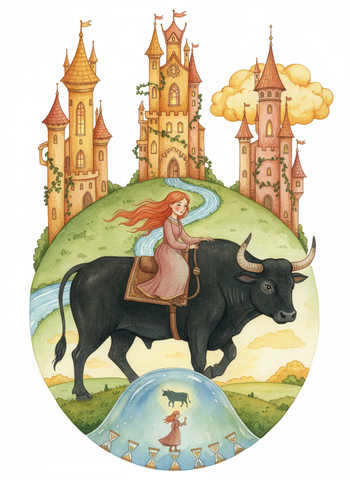
A young woman travels through three enchanted castles on the back of a mysterious black bull, then must serve seven years and climb a hill of glass to find him again after they are separated.
And many a hunting song they sung, And song of game and glee; Then tuned to plaintive strains their tongue, “Of Scotland’s luve and lee.” To wilder measures next they turn “The Black, Black Bull of Norroway!” Sudden the tapers cease to burn, The minstrels cease to play.
Y cantaron muchas canciones de caza, y canciones de juego y de alegría; luego afinaron la voz en tonos quejumbrosos, «del amor y la tierra de Escocia». A medidas más salvajes volvieron después «¡El Toro Negro, Negro de Norroway!» De pronto las velas dejan de arder, los juglares dejan de tocar.
“The Cout of Keeldar,” by J. Leyden.
«El Coloso de Keeldar», por J. Leyden.
In Norroway, langsyne, there lived a certain lady, and she had three dochters. The auldest o’ them said to her mither: “Mither, bake me a bannock, and roast me a collop, for I’m gaun awa’ to seek my fortune.” Her mither did sae; and the dochter gaed awa’ to an auld witch washerwife and telled her purpose.
En Norroway, hace mucho tiempo, vivía cierta dama, y tenía tres hijas. La mayor de ellas le dijo a su madre: «Madre, hazme un panecillo, y ásame una tajada, porque me voy a buscar fortuna.» Su madre así lo hizo; y la hija se fue a ver a una vieja bruja lavandera y le contó su propósito.
The auld wife bade her stay that day, and gang and look out o’ her back door, and see what she could see. She saw nocht the first day. The second day she did the same, and saw nocht. On the third day she looked again, and saw a coach-and-six coming along the road. She ran in and telled the auld wife what she saw. “Aweel,” quo’ the auld wife, “yon’s for you.” Sae they took her into the coach, and galloped aff.
La vieja le dijo que se quedara aquel día, y que fuera a mirar por su puerta trasera, a ver qué podía ver. No vio nada el primer día. El segundo día hizo lo mismo, y no vio nada. Al tercer día miró de nuevo, y vio un carruaje de seis caballos que venía por el camino. Corrió adentro y le contó a la vieja lo que había visto. «Bueno», dijo la vieja, «ese es para ti.» Así que la subieron al carruaje, y salieron al galope.
The second dochter next says to her mither: “Mither, bake me a bannock, and roast me a collop, fur I’m gaun awa’ to seek my fortune.” Her mither did sae; and awa’ she gaed to the auld wife, as her sister had dune. On the third day she looked out o’ the back door, and saw a coach-and-four coming along the road. “Aweel,” quo’ the auld wife, “yon’s for you.” Sae they took her in, and aff they set.
La segunda hija le dijo entonces a su madre: «Madre, hazme un panecillo, y ásame una tajada, porque me voy a buscar fortuna.» Su madre así lo hizo; y se fue a ver a la vieja, como había hecho su hermana. Al tercer día miró por la puerta trasera, y vio un carruaje de cuatro caballos que venía por el camino. «Bueno», dijo la vieja, «ese es para ti.» Así que la subieron, y partieron.
The third dochter says to her mither: “Mither, bake me a bannock, and roast me a collop, for I’m gaun awa’ to seek my fortune.” Her mither did sae; and awa’ she gaed to the auld witch-wife. She bade her look out o’ her back door, and see what she could see. She did sae; and when she came back said she saw nocht. The second day she did the same, and saw nocht.
La tercera hija le dijo a su madre: «Madre, hazme un panecillo, y ásame una tajada, porque me voy a buscar fortuna.» Su madre así lo hizo; y se fue a ver a la vieja bruja. Esta le dijo que mirara por su puerta trasera, a ver qué podía ver. Así lo hizo; y cuando volvió dijo que no había visto nada. El segundo día hizo lo mismo, y no vio nada.
The third day she looked again, and on coming back said to the auld wife she saw nocht but a muckle Black Bull coming roaring alang the road. “Aweel,” quo’ the auld wife, “yon’s for you.” On hearing this she was next to distracted wi’ grief and terror; but she was lifted up and set on his back, and awa’ they went.
Al tercer día miró de nuevo, y al volver le dijo a la vieja que no había visto nada más que un enorme Toro Negro que venía bramando por el camino. «Bueno», dijo la vieja, «ese es para ti.» Al oír esto, la joven casi enloqueció de pena y de terror; pero la alzaron y la sentaron sobre el lomo del toro, y partieron.
Aye they traveled, and on they traveled, till the lady grew faint wi’ hunger. “Eat out o’ my right lug,” says the Black Bull, “and drink out o’ my left lug, and set by your leavings.” Sae she did as he said, and was wonderfully refreshed.
Viajaron y viajaron, hasta que la dama empezó a desfallecer de hambre. «Come de mi oreja derecha», dijo el Toro Negro, «y bebe de mi oreja izquierda, y guarda lo que sobre.» Así que ella hizo lo que él le dijo, y quedó maravillosamente reconfortada.
And lang they gaed, and sair they rade, till they came in sight o’ a very big and bonny castle. “Yonder we maun be this night,” quo’ the bull; “for my auld brither lives yonder”; and presently they were at the place. They lifted her aff his back, and took her in, and sent him away to a park for the night. In the morning, when they brought the bull hame, they took the lady into a fine shining parlor, and gave her a beautiful apple, telling her no to break it till she was in the greatest strait ever mortal was in in the world, and that wad bring her o’t.
Y anduvieron largo trecho, y cabalgaron con esfuerzo, hasta que llegaron a la vista de un castillo grande y hermoso. «Allí debemos pasar esta noche», dijo el toro; «pues allí vive mi hermano mayor»; y enseguida llegaron al lugar. La bajaron de su lomo, y la llevaron adentro, y enviaron al toro a un prado para pasar la noche. A la mañana siguiente, cuando trajeron de vuelta al toro, llevaron a la dama a un fino salón resplandeciente, y le dieron una hermosa manzana, diciéndole que no la abriera hasta que estuviera en el mayor apuro en que jamás estuviera mortal alguno, y que eso la sacaría de él.
Again she was lifted on the bull’s back, and after she had ridden far, and farer than I can tell, they came in sight o’ a far bonnier castle, and far farther awa’ than the last. Says the bull till her: “Yonder we maun be the night, for my second brither lives yonder”; and they were at the place directly. They lifted her down and took her in, and sent the bull to the field for the night.
De nuevo la subieron al lomo del toro, y tras haber cabalgado lejos, y más lejos de lo que puedo contar, llegaron a la vista de un castillo mucho más hermoso, y mucho más lejano que el anterior. Le dijo el toro: «Allí debemos pasar la noche, pues allí vive mi segundo hermano»; y en seguida estuvieron en el lugar. La bajaron y la llevaron adentro, y enviaron al toro al campo para pasar la noche.
In the morning they took the lady into a fine and rich room, and gave her the finest pear she had ever seen, bidding her no to break it till she was in the greatest strait ever mortal could be in, and that wad get her out o’t.
Por la mañana llevaron a la dama a una habitación fina y rica, y le dieron la pera más hermosa que jamás había visto, pidiéndole que no la abriera hasta que estuviera en el mayor apuro en que pudiera estar mortal alguno, y que eso la sacaría de él.
Again she was lifted and set on his back, and awa’ they went. And lang they gaed, and sair they rade, till they came in sight o’ the far biggest castle, and far farthest aff, they had yet seen. “We maun be yonder the night,” says the bull, “for my young brither lives yonder”; and they were there directly. They lifted her down, took her in, and sent the bull to the field for the night.
De nuevo la alzaron y la sentaron sobre su lomo, y partieron. Y anduvieron largo trecho, y cabalgaron con esfuerzo, hasta que llegaron a la vista del castillo más grande, y el más lejano de todos los que habían visto. «Allí debemos estar esta noche», dijo el toro, «pues allí vive mi hermano menor»; y en seguida estuvieron allí. La bajaron, la llevaron adentro, y enviaron al toro al campo para pasar la noche.
In the morning they took her into a room, the finest of a’, and gied her a plum, telling her no to break it till she was in the greatest strait mortal could be in, and that wad get her out o’t. Presently they brought hame the bull, set the lady on his back, and awa’ they went.
Por la mañana la llevaron a una habitación, la más hermosa de todas, y le dieron una ciruela, diciéndole que no la abriera hasta que estuviera en el mayor apuro en que pudiera estar mortal alguno, y que eso la sacaría de él. Enseguida trajeron de vuelta al toro, sentaron a la dama sobre su lomo, y partieron.
And aye they gaed, and on they rade, till they came to a dark and ugsome glen, where they stopped, and the lady lighted down. Says the bull to her: “Here ye maun stay till I gang and fight the deil. Ye maun seat yoursel’ on that stane, and move neither hand nor fit till I come back, else I’ll never find ye again. And if everything round about ye turns blue I hae beated the deil; but should a’ things turn red he’ll hae conquered me.”
Y anduvieron y anduvieron, hasta que llegaron a un valle oscuro y terrible, donde se detuvieron, y la dama descendió. Le dijo el toro: «Aquí debes quedarte hasta que yo vaya a luchar contra el diablo. Debes sentarte sobre esa piedra, y no mover ni mano ni pie hasta que yo vuelva, o de lo contrario nunca volveré a encontrarte. Y si todo a tu alrededor se vuelve azul, habré vencido al diablo; pero si todo se vuelve rojo, él me habrá vencido a mí.»
She set hersel’ down on the stane, and by-and-by a’ round her turned blue. O’ercome wi’ joy, she lifted the ae fit and crossed it owre the ither, sae glad was she that her companion was victorious. The bull returned and sought for but never could find her.
Se sentó sobre la piedra, y poco a poco todo a su alrededor se volvió azul. Vencida por la alegría, alzó un pie y lo cruzó sobre el otro, tan contenta estaba de que su compañero hubiera vencido. El toro regresó y la buscó, pero nunca pudo encontrarla.
Lang she sat, and aye she grat, till she wearied. At last she rase and gaed awa’, she kedna whaur till. On she wandered till she came to a great hill o’ glass, that she tried a’ she could to climb, bat wasna able.
Se quedó sentada largo tiempo, y no dejó de llorar, hasta que se cansó. Al fin se levantó y se marchó, sin saber adónde. Anduvo errante hasta que llegó a una gran colina de vidrio, que trató por todos los medios de escalar, pero no pudo.
Round the bottom o’ the hill she gaed, sabbing and seeking a passage owre, till at last she came to a smith’s house; and the smith promised, if she wad serve him seven years, he wad make her iron shoon, wherewi’ she could climb owre the glassy hill. At seven years’ end she got her iron shoon, clamb the glassy hill, and chanced to come to the auld washerwife’s habitation. There she was telled of a gallant young knight that had given in some bluidy sarks to wash, and whaever washed thae sarks was to be his wife.
Rodeó la base de la colina, sollozando y buscando un paso para cruzarla, hasta que por fin llegó a la casa de un herrero; y el herrero le prometió que, si le servía siete años, le haría zapatos de hierro, con los cuales podría escalar la colina de vidrio. Al cabo de siete años consiguió sus zapatos de hierro, escaló la colina de vidrio, y por casualidad llegó a la vivienda de la vieja lavandera. Allí le contaron de un apuesto joven caballero que había dado a lavar unas camisas ensangrentadas, y que quien las lavara sería su esposa.
The auld wife had washed till she was tired, and then she set to her dochter, and baith washed, and they washed, and they better washed, in hopes of getting the young knight; but a’ they could do they couldna bring out a stain. At length they set the stranger damosel to wark; and whenever she began the stains came out pure and clean, but the auld wife made the knight believe it was her dochter had washed the sarks. So the knight and the eldest dochter were to be married, and the stranger damosel was distracted at the thought of it, for she was deeply in love wi’ him.
La vieja había lavado hasta cansarse, y luego puso a trabajar a su hija, y ambas lavaron, y lavaron, y lavaron mejor, con la esperanza de conseguir al joven caballero; pero por más que hicieron no lograron quitar ni una mancha. Al fin pusieron a trabajar a la doncella forastera; y en cuanto ella empezó, las manchas salieron limpias y puras, pero la vieja hizo creer al caballero que había sido su hija quien había lavado las camisas. Así que el caballero y la hija mayor iban a casarse, y la doncella forastera se angustió al pensarlo, pues estaba profundamente enamorada de él.
So she bethought her of her apple, and breaking it, found it filled with gold and precious jewelry, the richest she had ever seen. “All these,” she said to the eldest dochter, “I will give you, on condition that you put off your marriage for ae day, and allow me to go into his room alone at night.” So the lady consented; but meanwhile the auld wife had prepared a sleeping-drink, and given it to the knight, wha drank it, and never wakened till next morning. The lee-lang night ther damosel sabbed and sang:
Entonces se acordó de su manzana, y al partirla, la encontró llena de oro y joyas preciosas, las más ricas que jamás había visto. «Todo esto», le dijo a la hija mayor, «te lo daré, con la condición de que retrases tu boda un día, y me permitas entrar sola a su habitación por la noche.» Así que la dama consintió; pero mientras tanto la vieja había preparado una bebida para dormir, y se la había dado al caballero, quien la bebió, y no despertó hasta la mañana siguiente. Toda la larga noche la doncella sollozó y cantó:
“Seven lang years I served for thee, The glassy hill I clamb for thee, The bluidy shirt I wrang for thee; And wilt thou no wauken and turn to me?”
«Siete largos años te serví, la colina de vidrio por ti escalé, la camisa ensangrentada por ti restregué; ¿y no despertarás para volverte hacia mí?»
Next day she kentna what to do for grief. She then brak the pear, and found it filled wi’ jewelry far richer than the contents o’ the apple. Wi’ thae jewels she bargained for permission to be a second night in the young knight’s chamber; but the auld wife gied him anither sleeping-drink, and he again sleepit till morning. A’ night she kept sighing and singing as before:
Al día siguiente no sabía qué hacer de la pena. Entonces partió la pera, y la encontró llena de joyas mucho más ricas que el contenido de la manzana. Con esas joyas negoció permiso para pasar una segunda noche en la cámara del joven caballero; pero la vieja le dio otra bebida para dormir, y él volvió a dormir hasta la mañana. Toda la noche ella siguió suspirando y cantando como antes:
“Seven lang years I served for thee,” &c. Still he sleepit, and she nearly lost hope a’thegither. But that day when he was out at the hunting, somebody asked him what noise and moaning was yon they heard all last night in his bedchamber. He said he heardna ony noise. But they assured him there was sae; and he resolved to keep waking that night to try what he could hear.
«Siete largos años te serví», etc. Él seguía durmiendo, y ella casi perdió toda esperanza. Pero aquel día, cuando él estaba de caza, alguien le preguntó qué ruido y qué lamentos eran esos que se oyeron toda la noche pasada en su alcoba. Él dijo que no había oído ningún ruido. Pero le aseguraron que sí lo había habido; y él resolvió mantenerse despierto aquella noche para averiguar qué podía oír.
That being the third night, and the damosel being between hope and despair, she brak her plum, and it held far the richest jewelry of the three. She bargained as before; and the auld wife, as before, took in the sleeping-drink to the young knight’s chamber; but he telled her he couldna drink it that night without sweetening. And when she gaed awa’ for some honey to sweeten it wi’, he poured out the drink, and sae made the auld wife think he had drunk it. They a’ went to bed again, and the damosel began, as before, singing:
Siendo aquella la tercera noche, y estando la doncella entre la esperanza y la desesperación, partió su ciruela, y esta contenía las joyas más ricas de las tres. Negoció como antes; y la vieja, como antes, llevó la bebida para dormir a la cámara del joven caballero; pero él le dijo que no podría beberla esa noche sin endulzarla. Y cuando ella salió a buscar un poco de miel para endulzarla, él vertió la bebida, haciéndole creer así a la vieja que la había bebido. Volvieron todos a acostarse, y la doncella comenzó, como antes, a cantar:
“Seven lang years I served for thee, The glassy hill I clamb for thee, The bluidy shirt I wrang for thee; And wilt thou no wauken and turn to me?”
«Siete largos años te serví, la colina de vidrio por ti escalé, la camisa ensangrentada por ti restregué; ¿y no despertarás para volverte hacia mí?»
He heard, and turned to her. And she telled him a’ that had befa’en her, and he telled her a’ that had happened to him. And he caused the auld washerwife and her dochter to be burned. And they were married, and he and she are living happy till this day, for aught I ken.(1)
Él la oyó, y se volvió hacia ella. Y ella le contó todo lo que le había ocurrido, y él le contó todo lo que le había pasado a él. E hizo que quemaran a la vieja lavandera y a su hija. Y se casaron, y él y ella viven felices hasta el día de hoy, por lo que yo sé.(1)
(1) Chambers, Popular Traditions of Scotland.
(1) Chambers, Popular Traditions of Scotland.
