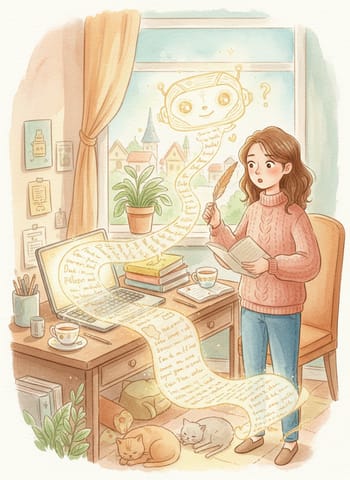
The Manuscript That Writes Back
قصة إنجليزية مجانية بالمستوى B2 لمتعلمي اللغات، يمكن قراءتها على الإنترنت بلغات عددها 8، مع إمكانية الاستماع إليها عبر تطبيق Storyteller المجاني.
A novelist realizes her AI writing assistant has quietly taken over her voice, and has to relearn how to write her own imperfect sentences.
انتهى المقطع التجريبي! استمع إلى القصة كاملة في تطبيق Storyteller المجاني. حمّل التطبيق
الصوت غير متاح الآن.
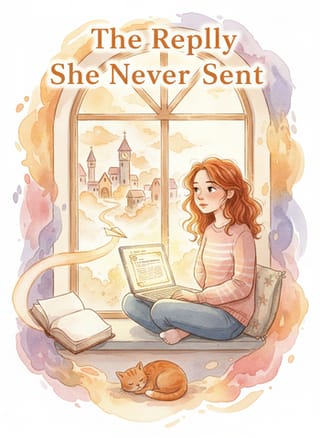
Mireille had bought the writing assistant to help her past a stubborn chapter, not to replace her own voice. It was supposed to suggest a few sentences when she got stuck, nothing more.
اشترت ميراي مساعد الكتابة ليعينها على تجاوز فصل عصيّ، لا ليحلّ محل صوتها. كان من المفترض أن يقترح عليها بضع جمل حين تتعثر، لا أكثر.
By the third month, though, she had started accepting its suggestions more often than she rewrote them. The assistant had clearly been trained on thousands of novels, and it produced clean, competent prose faster than she could think.
لكن بحلول الشهر الثالث كانت قد بدأت تقبل اقتراحاته أكثر مما تعيد كتابتها. فقد كان من الواضح أنه دُرّب على آلاف الروايات، وكان ينتج نثرًا نظيفًا متقنًا أسرع مما تستطيع أن تفكر.
Her editor called about the new chapters, sounding puzzled rather than pleased. "These read well, but they don't sound like you anymore. Where's the messiness? The sentences that used to run too long on purpose?"
اتصل بها محررها بشأن الفصول الجديدة، وبدا محتارًا لا مسرورًا. «هذا يُقرأ جيدًا، لكنه لم يعد يشبهك. أين الفوضى؟ أين الجمل التي كانت تطول عن قصد أكثر من اللازم؟»
"I've just been writing faster," Mireille said, though even as she said it, she knew that wasn't quite honest.
«كنت أكتب بسرعة أكبر فحسب»، قالت ميراي، مع أنها وهي تقولها عرفت أن ذلك ليس صدقًا تمامًا.
If she had shown her editor the draft history, the truth would have been obvious: whole paragraphs generated, then lightly edited, then kept. She hadn't lied exactly, but she hadn't corrected the assumption either.
لو أطلعت محررها على سجل المسودة لبدت الحقيقة جلية: فقرات كاملة يولّدها المساعد، ثم تعدّلها تعديلًا طفيفًا، ثم تحتفظ بها. لم تكن قد كذبت تمامًا، لكنها لم تصحح الافتراض أيضًا.
That night, she opened the manuscript and read a passage the assistant had written for her. It was a scene where the protagonist finally admits something she'd been avoiding for chapters.
في تلك الليلة فتحت المخطوطة وقرأت مقطعًا كتبه المساعد لها. كان مشهدًا تعترف فيه البطلة أخيرًا بشيء ظلت تتجنبه فصولًا.
It was well constructed. It was also, Mireille realized, entirely hollow — technically sound sentences with nothing underneath them, because the tool had never actually admitted anything itself. It had no chapters it was avoiding.
كان محكم البناء. وكان أيضًا، كما أدركت ميراي، فارغًا تمامًا — جملًا سليمة من الناحية التقنية لا شيء تحتها، لأن الأداة لم تعترف قط بأي شيء بنفسها. لم تكن لديها فصول تتجنبها.
She deleted the passage and stared at the blank page that replaced it, feeling something close to panic. Could she still write it herself, after months of leaning on suggestions?
حذفت المقطع وحدّقت في الصفحة البيضاء التي حلّت محله، وهي تشعر بشيء يقارب الذعر. هل ما زالت قادرة على كتابته بنفسها بعد شهور من الاتكاء على الاقتراحات؟
She wrote badly for almost an hour, sentences that ran too long, ideas that circled without landing. Then, slowly, something in the rhythm returned — clumsy, but unmistakably hers.
كتبت كتابة رديئة قرابة ساعة، جملًا تطول أكثر من اللازم، وأفكارًا تدور دون أن تستقر. ثم عاد شيء ما في الإيقاع ببطء، أخرق، لكنه لها بلا أدنى شك.
The next morning, she emailed her editor. "The last three chapters need rewriting. I'll have new drafts by Friday."
في صباح اليوم التالي راسلت محررها بالبريد الإلكتروني: «الفصول الثلاثة الأخيرة تحتاج إلى إعادة كتابة. ستكون لديّ مسودات جديدة بحلول يوم الجمعة.»
"Everything okay?" the editor wrote back.
«هل كل شيء على ما يرام؟» كتب المحرر في رده.
"Better than okay," Mireille replied. "I'd just forgotten what my own bad sentences sounded like. Turns out I missed them."
«أفضل من ذلك بكثير»، ردّت ميراي. «كنت قد نسيت كيف تبدو جملي الرديئة. تبيّن أنني اشتقت إليها.»
She kept the assistant installed, but she stopped asking it to finish her thoughts. It could suggest a synonym now and then. The admitting, the avoiding, the hollow scenes made honest — those stayed hers.
أبقت المساعد مثبتًا على جهازها، لكنها توقفت عن أن تطلب منه إتمام أفكارها. صار بوسعه أن يقترح مرادفًا بين حين وآخر. أما الاعتراف والتجنب والمشاهد الفارغة التي صارت صادقة، فتلك بقيت لها.