The Park Chess Hustler
قصة إنجليزية مجانية بالمستوى B2 لمتعلمي اللغات، يمكن قراءتها على الإنترنت بلغات عددها 8، مع إمكانية الاستماع إليها عبر تطبيق Storyteller المجاني.
A park chess hustler loses to a silent nine-year-old and, instead of chasing her away, decides to teach her.
انتهى المقطع التجريبي! استمع إلى القصة كاملة في تطبيق Storyteller المجاني. حمّل التطبيق
الصوت غير متاح الآن.
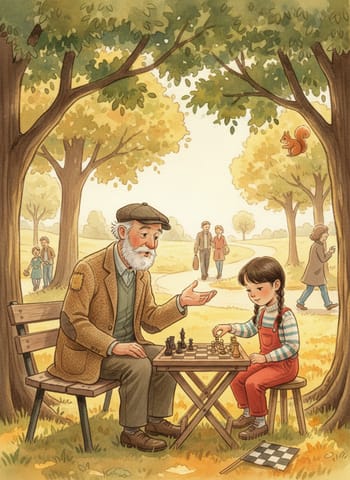
Every Saturday, Asha sets up her folding table under the big plane tree and waits for someone who thinks he is better than he is. Her sign reads, "Speed chess, five minutes, two dollars a game." Her real skill is not chess. It is knowing exactly how much to let a stranger believe.
كل سبت تنصب آشا طاولتها القابلة للطي تحت شجرة الدلب الكبيرة وتنتظر شخصًا يظن نفسه أفضل مما هو عليه. ومكتوب على لافتتها: «شطرنج سريع، خمس دقائق، دولاران للجولة.» ومهارتها الحقيقية ليست الشطرنج، بل أن تعرف بالضبط مقدار ما تدع الغريب يصدقه.
Today's customer is a man in a very clean jacket who has been explaining his favorite opening to her for ten minutes. She loses the first game on purpose, then wins the next three. He pays, grumbling, and she pockets the money.
زبون اليوم رجل يرتدي سترة نظيفة جدًا ظل يشرح لها افتتاحيته المفضلة عشر دقائق. تخسر الجولة الأولى عمدًا، ثم تربح الثلاث التالية. فيدفع وهو يتذمر، وتضع المال في جيبها.
Then a small girl appears at the edge of the table. She is perhaps nine, with a backpack bigger than her body and a stare that never blinks. She puts down two dollars and sits. She says nothing.
ثم تظهر طفلة صغيرة عند حافة الطاولة. عمرها تسع سنوات تقريبًا، ومعها حقيبة ظهر أكبر من جسمها ونظرة لا ترمش. تضع دولارين وتجلس. ولا تقول شيئًا.
Asha, amused, plays quickly and carelessly, as she always does with children. Twelve moves later, her queen is trapped. She stares at the board. "Lucky," she says. The girl shrugs and sets up the pieces again.
تلعب آشا، وقد استمتعت بالأمر، بسرعة وإهمال كما تفعل دائمًا مع الأطفال. بعد اثنتي عشرة نقلة تقع ملكتها في الفخ. فتحدق في الرقعة. «محظوظة»، تقول. فتهز الطفلة كتفيها وتعيد ترتيب القطع.
The second game is slower. Asha concentrates, which she has not done for a paying customer in years. It does not help. The girl takes her rook with a neat little tap and folds her hands in her lap.
الجولة الثانية أبطأ. تركز آشا، وهو ما لم تفعله مع زبون يدفع منذ سنوات. ولا يفيدها ذلك. فتأخذ الطفلة قلعتها بنقرة صغيرة أنيقة وتضم يديها في حجرها.
A tall man hurries across the grass, out of breath. "Jacinta! You can't just run off like that," he says. Then he sees the board and the two dollars in Asha's tray. "Oh no. Has she been playing for money?"
يعبر رجل طويل العشب مسرعًا وهو يلهث. «خاسينتا! لا يجوز أن تهربي هكذا فجأةً»، يقول. ثم يرى الرقعة والدولارين في صينية آشا. «يا للهول. هل كانت تلعب بالمال؟»
Asha opens her mouth to say yes, and to say something dignified about business. What comes out instead is, "She's beaten me twice."
تفتح آشا فمها لتقول نعم، ولتقول شيئًا يليق بالوقار عن التجارة. لكن ما يخرج منها بدلًا من ذلك هو: «لقد هزمتني مرتين.»
The man explains, a little apologetically, that his daughter has been reading the same chess book since spring. She will not speak to the coach at school, and she will hardly speak to anyone. They had hoped chess might be a way in.
يشرح الرجل، بشيء من الاعتذار، أن ابنته ظلت تقرأ كتاب الشطرنج نفسه منذ الربيع. وهي لا تتحدث إلى المدرب في المدرسة، وبالكاد تتحدث إلى أحد. وكانوا يأملون أن يكون الشطرنج بابًا إليها.
Asha knows what she should do. A sensible hustler would keep the two dollars and move her table to the far side of the park before the girl returned with friends. If she had any sense, she would do exactly that.
تعرف آشا ما ينبغي أن تفعله. فالمحتالة العاقلة تحتفظ بالدولارين وتنقل طاولتها إلى الطرف البعيد من الحديقة قبل أن تعود الطفلة مع أصدقائها. ولو كان لديها شيء من العقل لفعلت ذلك بالضبط.
Instead, she turns the board around. "Your opening was fine," she tells the girl. "But on move six, you took my pawn when you should have developed your knight. You got away with it because I wasn't paying attention."
لكنها بدلًا من ذلك تدير الرقعة. «كانت افتتاحيتك جيدة»، تقول للطفلة. «لكن في النقلة السادسة أخذتِ بيدقي حين كان ينبغي أن تُخرجي حصانك. ونجحتِ في ذلك لأنني لم أكن منتبهة.»
The girl listens, eyes fixed on the pieces. Then, very slightly, she nods.
تصغي الطفلة وعيناها مثبتتان على القطع. ثم تومئ برأسها إيماءة خفيفة جدًا.
"Come back next Saturday," Asha says to the father. "I'll show her a few things the book doesn't say."
«عُد بها يوم السبت القادم»، تقول آشا للأب. «سأريها بعض الأشياء التي لا يذكرها الكتاب.»
"How much would that cost?" he asks.
«كم سيكلف ذلك؟» يسأل.
Asha looks at the two dollars in her tray. She slides them back across the table. "Nothing. Call it professional curiosity."
تنظر آشا إلى الدولارين في صينيتها. وتعيدهما عبر الطاولة نحو الطفلة. «لا شيء. اعتبره فضولًا مهنيًا.»
The following Saturday, Jacinta arrives before the table has even been unfolded. By noon, she has beaten three of Asha's regular victims, and Asha has quietly repainted her sign. It now says, "Beat the kid and win four dollars." Nobody has won yet.
في السبت التالي تصل خاسينتا قبل أن تُفرد الطاولة أصلًا. وبحلول الظهر تكون قد هزمت ثلاثة من ضحايا آشا المعتادين، وتكون آشا قد أعادت كتابة لافتتها بهدوء. وصار مكتوبًا عليها الآن: «اهزم الطفلة واربح أربعة دولارات.» ولم يربح أحد بعد.
At the end of the afternoon, the girl pushes a small pile of coins across the table and holds up five fingers.
في آخر ساعات بعد الظهر تدفع الطفلة كومة صغيرة من القطع النقدية عبر الطاولة وترفع خمسة أصابع.
"Fifty percent?" Asha laughs. "Where did you learn to negotiate?"
«خمسون بالمئة؟» تضحك آشا. «أين تعلمتِ المساومة؟»
Jacinta points at the table and, very quietly, speaks her first word to Asha. "Here."
تشير خاسينتا إلى الطاولة وتنطق، بصوت خافت جدًا، أول كلمة لها لآشا: «هنا.»