The Tooth in the Fare Tin
قصة إنجليزية مجانية بالمستوى B1 لمتعلمي اللغات، يمكن قراءتها على الإنترنت بلغات عددها 8، مع إمكانية الاستماع إليها عبر تطبيق Storyteller المجاني.
A ferry worker finds a baby tooth in the fare tin and follows three clues to its owner.
انتهى المقطع التجريبي! استمع إلى القصة كاملة في تطبيق Storyteller المجاني. حمّل التطبيق
الصوت غير متاح الآن.
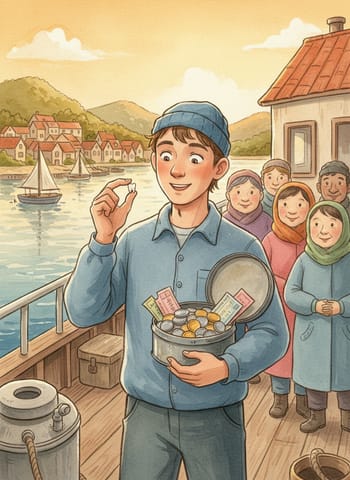
The ferry across the Long River has no engine. It is a flat wooden boat, wide enough for ten people and one cart. A thick rope runs from one bank to the other. To cross, you take the rope in your hands and pull. Rumi does this forty times a day, and her arms are as hard as fence posts.
العبّارة التي تعبر النهر الطويل بلا محرك. إنها قارب خشبي مسطح، يتسع لعشرة أشخاص وعربة واحدة. ويمتد حبل غليظ من ضفة إلى أخرى. وللعبور، تمسك الحبل بيديك وتشدّه. تفعل رومي هذا أربعين مرة في اليوم، وذراعاها صلبتان كأعمدة السياج.
She is twenty-three, and this is her second summer on the ferry. She likes the work. The river is slow and brown, and the boat moves with a soft creak, hand over hand. The only part she dislikes is the fare tin. It is an old biscuit tin that sits by the rope. It is always nearly empty.
عمرها ثلاثة وعشرون عامًا، وهذا صيفها الثاني على العبّارة. تحب العمل. فالنهر بطيء وبني، والقارب يتحرك بصرير خفيف، يدًا تلو الأخرى. والجزء الوحيد الذي لا تحبه هو علبة الأجرة. إنها علبة بسكويت قديمة تقف بجانب الحبل. وهي دائمًا شبه فارغة.
The fare is two small coins. Rumi does not ask for it. People drop the coins in the tin when they board, and most of them do. A few forget. A few have no change. She never chases anyone. But she counts the tin each night, and she knows when something is wrong.
الأجرة قطعتان نقديتان صغيرتان. لا تطلبها رومي. يلقي الناس القطعتين في العلبة حين يصعدون، ومعظمهم يفعل. وبعضهم ينسى. وبعضهم ليس معه فكة. ولا تلاحق أحدًا أبدًا. لكنها تعدّ العلبة كل ليلة، وتعرف حين يكون هناك خطب ما.
On this particular morning, she opens the lid and finds something unusual. Between three coins lies a small white envelope. It is thin, a little crumpled, and sealed with a piece of tape. On the front, in neat pencil, are two words: FOR FARE.
في هذا الصباح بالذات، تفتح الغطاء فتجد شيئًا غير معتاد. بين ثلاث قطع نقدية يرقد مغلف أبيض صغير. إنه رقيق، مجعد قليلًا، ومغلق بقطعة شريط لاصق. وعلى وجهه، بقلم رصاص أنيق، كلمتان: «للأجرة».
"That's new," Rumi says to nobody.
«هذا جديد»، تقول رومي دون أن تخاطب أحدًا.
She opens it carefully. Inside, wrapped in a tissue, is a tiny tooth. It is a baby tooth, small and white, with a narrow root. She holds it in her palm and looks at it for a long time. Then she puts it back in the tissue and sits down on the bench to think.
تفتحه بحذر. وبداخله، ملفوفة في منديل ورقي، سنّ صغيرة. إنها سن طفل، صغيرة وبيضاء، بجذر رفيع. تحملها في كفها وتنظر إليها طويلًا. ثم تعيدها إلى المنديل وتجلس على المقعد لتفكر.
"All right," she says. "Who pays a ferry with a tooth?"
«حسنًا»، تقول. «من الذي يدفع أجرة العبّارة بسنّ؟»
It is a question she cannot ignore. She loves a small mystery almost as much as the river. This is the best one she has had all summer. She decides to solve it before the last crossing of the day. She will write down everything she learns, on the back of her ticket book.
إنه سؤال لا تستطيع تجاهله. فهي تحب اللغز الصغير تقريبًا بقدر ما تحب النهر. وهذا أفضل لغز مرّ بها طوال الصيف. تقرر أن تحله قبل آخر عبور في اليوم. وستكتب كل ما تعرفه، على ظهر دفتر تذاكرها.
The first clue is the envelope itself. Rumi studies the writing. The pencil is soft and careful. It is the writing of someone who wants to be understood. It is not a child's handwriting, and it is not a doctor's. The tape is new, but the paper is soft and old. It spent years in a drawer. Somebody wrote this a long time ago, then put it away, and only recently took it out again.
الدليل الأول هو المغلف نفسه. تدرس رومي الكتابة. القلم الرصاص ناعم والخط دقيق. إنه خط شخص يريد أن يُفهم. وليس خط طفل، وليس خط طبيب. الشريط جديد، لكن الورق ناعم وقديم. أمضى سنوات في درج. كتب أحدهم هذا منذ زمن طويل، ثم وضعه جانبًا، ولم يُخرجه إلا مؤخرًا.
"A grown-up's writing, old paper," Rumi writes. "A tooth that waited."
«خط شخص بالغ، ورق قديم»، تكتب رومي. «سنّ انتظرت.»
The second clue comes at noon. The boat is almost full. A farmer with a basket of onions sits near the front. Two women with bright scarves lean on the side. A boy with a fishing rod keeps asking her if the river is deep. And at the back, standing by himself, is a young man with a very large backpack.
يأتي الدليل الثاني عند الظهر. القارب ممتلئ تقريبًا. يجلس مزارع معه سلة بصل قرب المقدمة. وتتكئ امرأتان بوشاحين زاهيين على الجانب. وصبي معه صنارة يواصل سؤالها هل النهر عميق. وفي الخلف، واقفًا وحده، شاب معه حقيبة ظهر كبيرة جدًا.
Rumi has not seen him before. He is about nineteen, with a thin face and a short haircut that looks new. He holds the strap of his backpack in both hands, like a child at a station. Every few minutes, he pats the pocket of his jacket and then looks anxiously at the tin.
لم تره رومي من قبل. عمره نحو تسعة عشر عامًا، بوجه نحيل وقصة شعر قصيرة تبدو جديدة. يمسك حزام حقيبته بكلتا يديه، كطفل في محطة. وكل بضع دقائق، يربّت على جيب سترته ثم ينظر بقلق إلى العلبة.
"Excuse me," he says, when the boat is halfway across. "How much is the fare?"
«عفوًا»، يقول، حين يصير القارب في منتصف النهر. «كم الأجرة؟»
"Two small coins," Rumi says. She keeps pulling the rope. "Put them in the tin."
«قطعتان صغيرتان»، تقول رومي. وتواصل شدّ الحبل. «ضعهما في العلبة.»
"I only have big notes," the young man says. "I just came out of the bank in town. I don't have any coins at all."
«ليس معي إلا أوراق نقدية كبيرة»، يقول الشاب. «لقد خرجت للتو من المصرف في البلدة. وليس معي أي عملات معدنية إطلاقًا.»
"Then you owe me, and you can pay next time."
«إذًا أنت مدين لي، ويمكنك أن تدفع في المرة القادمة.»
"There won't be a next time," he says. "I'm going to the city, to start a job. Tomorrow I begin at a shop that fixes bicycles. I may not come back for a year."
«لن تكون هناك مرة قادمة»، يقول. «أنا ذاهب إلى المدينة، لأبدأ عملًا. غدًا أبدأ في متجر يصلح الدراجات. وقد لا أعود قبل سنة.»
He pats his pocket again.
يربّت على جيبه مرة أخرى.
"I wanted to pay properly. I really did."
«أردت أن أدفع كما يجب. أردت ذلك فعلًا.»
Rumi looks at him over her shoulder. He is very serious. She likes him already, in the way you like a nervous stranger who is trying hard.
تنظر إليه رومي من فوق كتفها. إنه جاد جدًا. وهي تحبه بالفعل، كما يحب المرء غريبًا متوترًا يبذل جهده.
The third clue is small and almost invisible. When the young man speaks, he rubs his jaw, on the left side, with two fingers. He does it without noticing, as people do when they think about something old. Rumi watches the gesture. Then she looks at the tin, and then at his pocket again.
الدليل الثالث صغير وكاد لا يُرى. حين يتكلم الشاب، يفرك فكه من الجانب الأيسر بإصبعين. يفعل ذلك دون أن يلاحظ، كما يفعل الناس حين يفكرون في شيء قديم. تراقب رومي الحركة. ثم تنظر إلى العلبة، ثم إلى جيبه مرة أخرى.
"What's your name?" she asks.
«ما اسمك؟» تسأل.
"Takeshi."
«تاكيشي.»
"Takeshi," she says. "Do you know what is in the envelope?"
«تاكيشي»، تقول. «هل تعرف ما في المغلف؟»
He goes completely still. The boy with the fishing rod looks up. Takeshi takes a long breath and says, in a small voice, "You found it."
يتجمد تمامًا. يرفع الصبي صاحب الصنارة نظره. يأخذ تاكيشي نفسًا طويلًا ويقول بصوت صغير: «لقد وجدتِه.»
"I found it in the tin this morning," says Rumi. "Before you came. So it was there when you boarded. Somebody put it in before sunrise."
«وجدته في العلبة هذا الصباح»، تقول رومي. «قبل أن تأتي. إذًا كان هناك حين صعدت. وضعه أحدهم قبل شروق الشمس.»
"Nobody put it there," says Takeshi. "I did. I came to the landing last night and left it. I wanted to cross without coins. I thought it would be fine."
«لم يضعه أحد هناك»، يقول تاكيشي. «أنا فعلت. جئت إلى المرسى الليلة الماضية وتركته. أردت أن أعبر بلا عملات. ظننت أن الأمر سيكون على ما يرام.»
He looks at his shoes.
ينظر إلى حذائه.
"My mother wrote on it. She wrote it when I was six."
«أمي كتبت عليه. كتبته حين كنت في السادسة.»
"Why a tooth?" asks Rumi.
«لماذا سنّ؟» تسأل رومي.
"It's a joke. It's an old joke, from the village." He laughs. "When I was small, I was afraid of the river. Every time we crossed, I cried. So my mother told me that the ferry takes a tooth as payment if you have no coins. She said it wasn't a lie, because a tooth was a very good thing to give. Then I lost my first tooth. She put it in an envelope and wrote FOR FARE on the front. I could pay the river and feel brave."
«إنها مزحة. مزحة قديمة من القرية.» يضحك. «حين كنت صغيرًا، كنت أخاف النهر. وفي كل مرة نعبر، كنت أبكي. فقالت لي أمي إن العبّارة تأخذ سنًّا أجرةً إن لم يكن معك عملات. وقالت إن هذا ليس كذبًا، لأن السنّ شيء جيد جدًا يُعطى. ثم فقدت أول سنّ لي. فوضعته في مغلف وكتبت على وجهه كلمة للأجرة. فصار بإمكاني أن أدفع للنهر وأشعر بالشجاعة.»
"And you kept it for thirteen years," Rumi says.
«واحتفظت به ثلاث عشرة سنة»، تقول رومي.
"She kept it, actually. In the kitchen drawer. When I packed this week, she put it in my jacket pocket without saying anything. She said I should have the fare ready." He shakes his head. "I forgot the coins, but I remembered the joke. So I left the tooth in the tin last night, and then I felt terrible. I thought I'd given away something important. But I don't want to take it back now, because you might think I lied."
«هي من احتفظت به، في الحقيقة. في درج المطبخ. وحين حزمت أمتعتي هذا الأسبوع، وضعته في جيب سترتي دون أن تقول شيئًا. قالت إن عليّ أن أحضّر الأجرة.» يهز رأسه. «نسيت العملات، لكنني تذكرت المزحة. فتركت السنّ في العلبة الليلة الماضية، ثم شعرت بالسوء الشديد. ظننت أنني أعطيت شيئًا مهمًا. لكنني لا أريد أن أستعيده الآن، لأنك قد تظنين أنني كذبت.»
For a moment, nobody speaks. The women with scarves stop talking. The farmer turns around on his basket, holding an onion in one hand. The boy with the fishing rod stares at Takeshi with great respect.
للحظة، لا يتكلم أحد. تتوقف المرأتان ذواتا الوشاحين عن الحديث. يستدير المزارع على سلته، وفي يده بصلة. ويحدق الصبي صاحب الصنارة في تاكيشي باحترام كبير.
Then Rumi starts to laugh. She laughs so hard that her hands slip on the rope, and the boat slows down. The whole boat laughs with her. Takeshi hides his face in both hands.
ثم تبدأ رومي تضحك. تضحك بشدة حتى تنزلق يداها على الحبل، ويبطئ القارب. ويضحك القارب كله معها. ويخفي تاكيشي وجهه بين يديه.
"It's not funny," he says through his fingers.
«ليس مضحكًا»، يقول من بين أصابعه.
"It's very funny," Rumi says. "I thought I had a crime to solve. I thought a thief left his teeth in my tin. And it's just a boy who forgot his small coins."
«بل مضحك جدًا»، تقول رومي. «ظننت أن أمامي جريمة لأحلها. ظننت أن لصًا ترك أسنانه في علبتي. وهو مجرد فتى نسي عملاته الصغيرة.»
She wipes her eyes.
تمسح عينيها.
"Here. Take it back."
«خذها. استعدها.»
She puts the little tissue in his open hand. He looks at it. Then he folds his fingers around it, carefully.
تضع المنديل الصغير في يده المفتوحة. ينظر إليه. ثم يطوي أصابعه عليه بعناية.
"Thank you," he says. "But the fare—"
«شكرًا»، يقول. «لكن الأجرة—»
"The fare for a tooth is a very serious matter," Rumi says. "I must think about it."
«أجرة السنّ مسألة جادة جدًا»، تقول رومي. «يجب أن أفكر فيها.»
She nods toward the thick, wet rope, which hangs between her hands.
تومئ نحو الحبل الغليظ المبلل، المتدلي بين يديها.
"Come here, Takeshi. Take the other side of the rope. Teeth don't pay on this boat, but arms do."
«تعال إلى هنا يا تاكيشي. أمسك الجانب الآخر من الحبل. الأسنان لا تدفع أجرة على هذا القارب، لكن الأذرع تدفع.»