The Folded Crane on the Roof
قصة إنجليزية مجانية بالمستوى B1 لمتعلمي اللغات، يمكن قراءتها على الإنترنت بلغات عددها 8، مع إمكانية الاستماع إليها عبر تطبيق Storyteller المجاني.
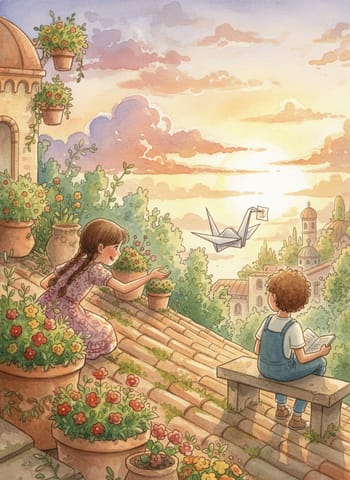
Dalila is too shy to speak to Omar, so she sends a paper crane across the roof garden and hopes it finds him.
انتهى المقطع التجريبي! استمع إلى القصة كاملة في تطبيق Storyteller المجاني. حمّل التطبيق
الصوت غير متاح الآن.
On Saturday mornings, Dalila runs a small plant stall on the roof garden above the shopping centre. The garden club from her school sells seedlings there to raise money for a new greenhouse. Most visitors want basil or sunflowers. Dalila mostly wants to look at the herb beds across the path.
في صباح كل سبت، تدير دليلة كشكًا صغيرًا للنباتات على حديقة السطح فوق المركز التجاري. يبيع نادي البستنة في مدرستها الشتلات هناك لجمع المال من أجل دفيئة جديدة. معظم الزوار يريدون الريحان أو دوار الشمس. أما دليلة فتريد في الغالب أن تنظر إلى أحواض الأعشاب عبر الممر.
That is where Omar works. He wears a green apron. He carries a dented watering can that is always a little too full. He knows the name of every plant in the garden. He also knows which ones have been watered and which ones are pretending.
هناك يعمل عمر. يرتدي مئزرًا أخضر. ويحمل إبريق ري مبعوجًا يكون ممتلئًا أكثر من اللازم قليلًا دائمًا. ويعرف اسم كل نبتة في الحديقة. ويعرف أيضًا أيّها سُقي وأيّها يتظاهر بذلك.
Dalila has watched him for three weeks. She has never said more than "Hello" and "Thanks." Every time she plans a longer sentence, it falls apart before it reaches her mouth.
تراقبه دليلة منذ ثلاثة أسابيع. ولم تقل له أكثر من «مرحبًا» و«شكرًا». وفي كل مرة تخطط لجملة أطول، تتفكك قبل أن تصل إلى فمها.
This morning she sits behind the stall with a page from the seed catalogue. It shows a large photograph of purple lavender. She folds the paper carefully, corner to corner, the way her cousin showed her last summer. Ten minutes later, she is holding a paper crane with long, pointed wings.
هذا الصباح تجلس خلف الكشك ومعها صفحة من كتالوج البذور. تحمل صورة كبيرة للخزامى البنفسجية. تطويها بعناية، من زاوية إلى زاوية، كما علّمها ابن عمها الصيف الماضي. وبعد عشر دقائق تمسك كركيًّا ورقيًّا بجناحين طويلين مدببين.
Before she closes the last fold, she writes on the inside in tiny letters. Then she lifts the wing and reads it again. It says: "I think the mint likes you more than it likes me."
قبل أن تغلق الطية الأخيرة، تكتب في الداخل بحروف صغيرة جدًا. ثم ترفع الجناح وتقرأ ما كتبته مرةً أخرى. مكتوب فيه: «أظن أن النعناع يحبك أكثر مما يحبني.»
It is not a great sentence. It is probably the bravest one she has ever written.
ليست جملة رائعة. لكنها على الأرجح أشجع جملة كتبتها في حياتها.
"Okay," she whispers. "Now I only need to give it to him."
«حسنًا»، تهمس. «لا يبقى إلا أن أعطيه إياها.»
She stands up and sits down again. Omar is twenty steps away, bent over the thyme. Twenty steps feels like the length of a football field.
تقف ثم تجلس مرةً أخرى. عمر على بعد عشرين خطوة، منحنٍ فوق الزعتر. وتبدو العشرون خطوة كطول ملعب كرة قدم.
The woman at the next stall looks over. She sells flowers in paper cones, and she misses nothing. "Is that for someone?" she asks.
تنظر إليها المرأة في الكشك المجاور. تبيع الزهور في أكياس مخروطية من الورق، ولا يفوتها شيء. «هل هذا لأحد ما؟» تسأل.
"Maybe," says Dalila. Her voice comes out smaller than she wants. "Could you give it to the boy with the watering can? Please? I have to watch the till."
«ربما»، تقول دليلة. يخرج صوتها أضعف مما تريد. «هل يمكنك أن تعطيه للفتى الذي معه إبريق الري؟ من فضلك؟ عليّ أن أراقب صندوق النقود.»
The woman smiles and takes the crane in her palm. "Of course, love. Leave it with me."
تبتسم المرأة وتأخذ الكركي في راحة يدها. «بالطبع يا عزيزتي. اتركيه معي.»
Dalila sits very still and tries to look busy. She straightens a row of pots. She counts the coins in the till twice. Out of the corner of her eye, she watches the flower seller walk down the path.
تجلس دليلة ساكنة تمامًا وتحاول أن تبدو مشغولة. ترتب صفًا من الأصص. وتعدّ العملات في صندوق النقود مرتين. وبطرف عينها تراقب بائعة الزهور وهي تمشي في الممر.
Then something goes wrong. A school group arrives. The path fills with children carrying small green watering cans. At least six boys are holding a can. The woman stops, looks around, and chooses the nearest one.
ثم يسوء شيء ما. تصل مجموعة مدرسية. ويمتلئ الممر بأطفال يحملون أباريق ري خضراء صغيرة. ما لا يقل عن ستة أولاد يحملون إبريقًا. تتوقف المرأة، وتنظر حولها، وتختار أقربهم.
"This is for you," she says, and puts the crane in his hands.
«هذا لك»، تقول، وتضع الكركي في يديه.
The boy is about nine years old. He looks at the crane for a long time, as if it might be a trick. Then he decides it is a prize. "Cool!" he says. He holds it above his head and runs off down the path.
الصبي في نحو التاسعة من عمره. ينظر إلى الكركي طويلًا، كأنه قد يكون خدعة. ثم يقرر أنه جائزة. «رائع!» يقول. يرفعه فوق رأسه ويركض في الممر.
Dalila puts her face in her hands. The nine-year-old runs past the herb beds and the fountain. He runs straight into a man in a blue uniform who is checking the lift. The man is a security guard, and he is very serious about his job.
تدفن دليلة وجهها في يديها. يركض الصبي ذو التسع سنوات مارًّا بأحواض الأعشاب والنافورة. ويصطدم مباشرةً برجل بزي أزرق يفحص المصعد. الرجل حارس أمن، وهو جاد جدًا في عمله.
"Where did you get that?" the guard asks.
«من أين حصلت على هذا؟» يسأل الحارس.
"A lady gave it to me," says the boy.
«أعطتني إياه سيدة»، يقول الصبي.
"Then it belongs to somebody," the guard says. He takes the crane gently and turns it around in his large hands. He finds a single letter on one wing, a small neat D. "Hmm. D," he mutters. "Does anyone here have a name that starts with D?"
«إذًا هو ملك لشخص ما»، يقول الحارس. يأخذ الكركي برفق ويقلّبه بين يديه الكبيرتين. يجد حرفًا واحدًا على أحد الجناحين، حرف «د» صغيرًا مرتبًا. «همم. د»، يتمتم. «هل لدى أحد هنا اسم يبدأ بحرف الدال؟»
Nobody answers. A few people look up and then look away.
لا أحد يجيب. يرفع بعض الناس رؤوسهم ثم يشيحون بأنظارهم.
The guard walks the length of the garden, holding the crane out like a lost glove. At the stall, he asks Dalila. Dalila freezes and cannot say a word, but her neighbour answers for her.
يمشي الحارس على طول الحديقة، رافعًا الكركي كأنه قفاز ضائع. وعند الكشك يسأل دليلة. تتجمد دليلة ولا تستطيع قول كلمة، لكن جارتها تجيب عنها.
"Her name starts with D," says the flower seller. "But it isn't hers. It is for the boy with the watering can."
«اسمها يبدأ بحرف الدال»، تقول بائعة الزهور. «لكن هذا ليس لها. إنه للفتى الذي معه إبريق الري.»
"Which boy?" asks the guard. "There are six of them."
«أي فتى؟» يسأل الحارس. «هناك ستة منهم.»
"The one in the green apron," says the woman.
«الذي يرتدي المئزر الأخضر»، تقول المرأة.
The guard nods slowly. "Ah, the gardener," he says. He gives the crane a little bow, as if it could understand. "That I can do."
يومئ الحارس ببطء. «آه، البستاني»، يقول. ينحني للكركي انحناءة صغيرة، كأنه يفهم. «هذا أستطيع فعله.»
He walks to the herb beds and stops beside the thyme. Omar looks up from his work. His hands are muddy, and there is a leaf in his hair.
يمشي إلى أحواض الأعشاب ويتوقف بجانب الزعتر. يرفع عمر رأسه من عمله. يداه موحلتان، وفي شعره ورقة.
"Excuse me," says the guard. "A young lady sent this. I think it might be yours."
«عفوًا»، يقول الحارس. «أرسلت آنسة هذا. أظنه قد يكون لك.»
Omar wipes his fingers on his apron and takes the crane as if it were made of glass. He looks at the wings and at the folded point of the beak. He turns it over twice, and then he finds the corner that opens.
يمسح عمر أصابعه في مئزره ويأخذ الكركي كأنه مصنوع من زجاج. ينظر إلى الجناحين وإلى النقطة المطوية في المنقار. ويقلّبه مرتين، ثم يجد الزاوية التي تنفتح.
Dalila cannot see his face from the stall. She can only see his back and the green apron. The guard walks away, whistling softly, and she feels both horrified and strangely proud.
لا تستطيع دليلة أن ترى وجهه من الكشك. ترى ظهره والمئزر الأخضر فقط. يبتعد الحارس وهو يصفر بهدوء، وتشعر بالهلع وبفخر غريب معًا.
Omar unfolds the first fold. Then the second. He reads the line inside, and she sees his shoulders move. It might be a laugh. It might be something else.
يفتح عمر الطية الأولى. ثم الثانية. يقرأ السطر في الداخل، وترى كتفيه تهتزان. قد تكون ضحكة. وقد تكون شيئًا آخر.
He stands in the middle of the path with the crane open in his hand. He looks across the garden, past the tomato plants and the fountain and the line of waiting customers. He seems to be searching the faces one by one.
يقف في وسط الممر والكركي مفتوح في يده. ينظر عبر الحديقة، متجاوزًا نباتات الطماطم والنافورة وصف الزبائن المنتظرين. يبدو كأنه يفتش الوجوه واحدًا واحدًا.
Dalila ducks behind a tray of sunflower seedlings. Her heart is pounding so loudly that she is sure the customers can hear it.
تنحني دليلة خلف صينية من شتلات دوار الشمس. وقلبها يخفق بصوت عالٍ حتى إنها واثقة أن الزبائن يسمعونه.
"Excuse me," says a woman with a cardboard cup. "How much are the basil plants?"
«عفوًا»، تقول امرأة تحمل كوبًا ورقيًا. «بكم نباتات الريحان؟»
"Two for three," Dalila says, and she hands over a pot without looking at it.
«اثنتان بثلاثة»، تقول دليلة وتناولها أصيصًا دون أن تنظر إليه.
When she dares to glance up again, Omar is no longer standing on the path. She spins around. He is walking toward the stall, one slow step at a time. The crane is still in his hand, but now it has been folded back into shape, almost perfectly.
وحين تجرؤ على النظر إلى الأعلى مرةً أخرى، لا يكون عمر واقفًا في الممر. تدور حول نفسها. إنه يمشي نحو الكشك، خطوة بطيئة تلو الأخرى. الكركي ما زال في يده، لكنه الآن مطوي من جديد على شكله الأول، بإتقان يكاد يكون كاملًا.
He stops in front of her table. Up close, he is taller than she remembered, and there is mud on his cheek.
يتوقف أمام طاولتها. وهو من قريب أطول مما تذكرت، وعلى خده طين.
"That is a very good crane," he says.
«هذا كركي جميل جدًا»، يقول.
"Thanks," says Dalila. It is the same word she always says. She hates it.
«شكرًا»، تقول دليلة. وهي الكلمة نفسها التي تقولها دائمًا. وهي تكرهها.
Omar looks down at the paper and then up at her. "I have a problem with the mint," he says. "It keeps growing into the oregano. I have never found a way to stop it. Maybe you know one."
ينظر عمر إلى الورقة ثم إليها. «عندي مشكلة مع النعناع»، يقول. «إنه يستمر في النمو داخل الأوريغانو. لم أجد قط طريقة لإيقافه. ربما تعرفين طريقة.»
"I might," says Dalila. "I would have to see the bed first."
«ربما»، تقول دليلة. «سيكون عليّ أن أرى الحوض أولًا.»
"It is just over there," says Omar. He does not point, though. He is looking at the crane again, and his forehead is slightly wrinkled.
«إنه هناك فقط»، يقول عمر. لكنه لا يشير. إنه ينظر إلى الكركي مرةً أخرى، وجبهته مقطبة قليلًا.
"What is it?" she asks.
«ما الأمر؟» تسأل.
"You wrote something in the corner," he says. "Under the fold. It looks like a phone number, but the last digit is smudged. Is it a three or an eight?"
«كتبتِ شيئًا في الزاوية»، يقول. «تحت الطية. يبدو كرقم هاتف، لكن الرقم الأخير ممسوح. هل هو ثلاثة أم ثمانية؟»
Dalila opens her mouth and closes it again. She has not written a number. She is sure of it. She takes the crane from his hand, turns it toward the light, and tilts it very slowly.
تفتح دليلة فمها وتغلقه مرةً أخرى. لم تكتب رقمًا. وهي متأكدة من ذلك. تأخذ الكركي من يده، وتديره نحو الضوء، وتميله ببطء شديد.
The ink is faint and grey, and it is printed, not written. It is the order number from the seed catalogue, under the photograph of the lavender. The last digit has rubbed away in the fold.
الحبر خافت ورمادي، ومطبوع لا مكتوب. هو رقم الطلب من كتالوج البذور، تحت صورة الخزامى. وقد تآكل الرقم الأخير في الطية.
"It is not a phone number," she says. "It is lavender."
«ليس رقم هاتف»، تقول. «إنه خزامى.»
Omar laughs, and the mud on his cheek cracks a little. "Then show me how to stop the mint," he says. "After that, you can tell me the whole number."
يضحك عمر، ويتشقق الطين على خده قليلًا. «إذًا أرني كيف أوقف النعناع»، يقول. «وبعد ذلك يمكنك أن تخبريني بالرقم كاملًا.»
Dalila steps out from behind the stall and follows him to the herb beds. Across the path, six small boys argue about who owns the prize.
تخرج دليلة من خلف الكشك وتتبعه إلى أحواض الأعشاب. وعبر الممر، يتجادل ستة صبية صغار حول من يملك الجائزة.