True and Untrue
A free B1-level English story for language learners, readable online in 7 languages, with an option to listen via the free Storyteller app.
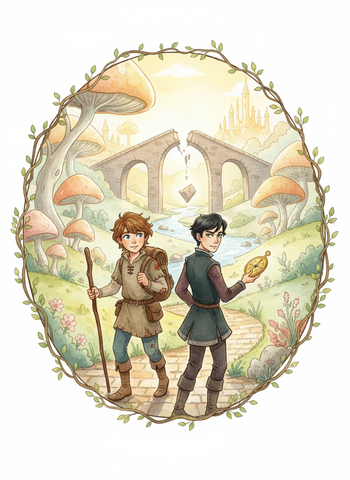
Two brothers, one honest and one treacherous, travel the world together until a broken promise nearly costs the honest one everything.
Once on a time there were two brothers; one was called True, and the other Untrue. True was always upright and good towards all, but Untrue was bad and full of lies, so that no one could believe what he said. Their mother was a widow, and hadn’t much to live on; so when her sons had grown up, she was forced to send them away, that they might earn their bread in the world. Each got a little scrip with some food in it, and then they went their way.
Era uma vez dois irmãos; um se chamava Verdadeiro, e o outro Falso. Verdadeiro era sempre justo e bom com todos, mas Falso era mau e cheio de mentiras, de modo que ninguém podia acreditar no que ele dizia. A mãe deles era viúva, e não tinha muito para viver; então, quando os filhos cresceram, ela foi obrigada a mandá-los embora, para que ganhassem o próprio sustento no mundo. Cada um recebeu uma pequena sacola com um pouco de comida, e então seguiram seu caminho.
Now, when they had walked till evening, they sat down on a windfall in the wood, and took out their scraps, for they were hungry after walking the whole day, and thought a morsel of food would be sweet enough.
Ora, quando já tinham caminhado até o entardecer, sentaram-se sobre uma árvore caída na floresta, e tiraram seus restos de comida, pois estavam famintos depois de andar o dia todo, e pensaram que um bocado de comida seria bem-vindo.
“If you’re of my mind”, said Untrue, “I think we had better eat out of your scrip, so long as there is anything in it, and after that we can take to mine.”
— Se você concordar comigo — disse Falso —, acho melhor comermos da sua sacola, enquanto houver alguma coisa nela, e depois podemos recorrer à minha.
Yes! True was well pleased with this, so they fell to eating, but Untrue got all the best bits, and stuffed himself with them, while True got only the burnt crusts and scraps.
Sim! Verdadeiro ficou muito satisfeito com isso, e assim começaram a comer, mas Falso pegou todos os melhores pedaços, e se empanturrou com eles, enquanto Verdadeiro ficou só com as cascas queimadas e os restos.
Next morning they broke their fast off True’s food, and they dined off it too, and then there was nothing left in his scrip. So when they had walked till late at night, and were ready to eat again, True wanted to eat out of his brother’s scrip, but Untrue said “No”, the food was his, and he had only enough for himself.
Na manhã seguinte quebraram o jejum com a comida de Verdadeiro, e almoçaram com ela também, e então não sobrou nada em sua sacola. Então, quando tinham caminhado até tarde da noite, e estavam prontos para comer de novo, Verdadeiro quis comer da sacola do irmão, mas Falso disse "não", que a comida era dele, e que só tinha o suficiente para si mesmo.
“Nay! but you know you ate out of my scrip so long as there was anything in it”, said True.
— Ora, mas você sabe que comeu da minha sacola enquanto havia alguma coisa nela — disse Verdadeiro.
“All very fine, I daresay”, answered Untrue; “but if you are such a fool as to let others eat up your food before your face, you must make the best of it; for now all you have to do is to sit here and starve.”
— Tudo muito bem, imagino — respondeu Falso —, mas se você é tolo o bastante para deixar que os outros comam sua comida bem debaixo do seu nariz, tem que se virar; pois agora tudo que você tem a fazer é ficar aí sentado e passar fome.
“Very well!” said True, “you’re Untrue by name and untrue by nature; so you have been, and so you will be all your life long.”
— Muito bem! — disse Verdadeiro. — Você se chama Falso e é falso por natureza; assim você foi, e assim você será por toda a sua vida.
Now when Untrue heard this, he flew into a rage, and rushed at his brother, and plucked out both his eyes. “Now, try if you can see whether folk are untrue or not, you blind buzzard!” and so saying, he ran away and left him.
Ora, quando Falso ouviu isso, ficou furioso, e avançou sobre o irmão, e arrancou os dois olhos dele. — Agora, tente ver se as pessoas são falsas ou não, seu urubu cego! — e dizendo isso, saiu correndo e o deixou ali.
Poor True! there he went walking along and feeling his way through the thick wood. Blind and alone, he scarce knew which way to turn, when all at once he caught hold of the trunk of a great bushy lime-tree, so he thought he would climb up into it, and sit there till the night was over for fear of the wild beasts.
Pobre Verdadeiro! lá ficou ele caminhando e tateando o caminho através da floresta densa. Cego e sozinho, mal sabia para onde se virar, quando de repente agarrou o tronco de uma grande e frondosa tília, e assim pensou em subir nela, e ficar sentado ali até a noite passar, com medo dos animais selvagens.
“When the birds begin to sing”, he said to himself, “then I shall know it is day, and I can try to grope my way farther on.” So he climbed up into the lime-tree. After he had sat there a little time, he heard how some one came and began to make a stir and clatter under the tree, and soon after others came; and when they began to greet one another, he found out it was Bruin the bear, and Greylegs the wolf, and Slyboots the fox, and Longears the hare who had come to keep St. John’s eve under the tree.
— Quando os pássaros começarem a cantar — disse ele para si mesmo —, então saberei que é dia, e poderei tentar tatear meu caminho adiante. — Então ele subiu na tília. Depois de ficar sentado ali um pouco, ouviu como alguém veio e começou a fazer barulho e alvoroço debaixo da árvore, e logo depois vieram outros; e quando começaram a se cumprimentar, ele percebeu que eram o Urso Bruin, e Perna-Cinzenta o lobo, e Astucioso a raposa, e Orelhudo a lebre, que tinham vindo passar a véspera de São João debaixo da árvore.
So they began to eat and drink, and be merry; and when they had done eating, they fell to gossipping together. At last the Fox said:
Então começaram a comer e beber, e se divertir; e quando terminaram de comer, começaram a fofocar juntos. Por fim a Raposa disse:
“Shan’t we, each of us, tell a little story while we sit here?” Well! the others had nothing against that. It would be good fun, they said, and the Bear began; for you may fancy he was king of the company.
— Que tal cada um de nós contar uma pequena história enquanto estamos aqui sentados? — Pois bem! os outros não tinham nada contra isso. Seria divertido, disseram, e o Urso começou; pois pode-se imaginar que ele era o rei do bando.
“The king of England”, said Bruin, “has such bad eyesight, he can scarce see a yard before him; but if he only came to this lime-tree in the morning, while the dew is still on the leaves, and took and rubbed his eyes with the dew, he would get back his sight as good as ever.”
— O rei da Inglaterra — disse Bruin — tem uma visão tão ruim, que mal consegue ver um metro à frente; mas se ele viesse a esta tília pela manhã, enquanto o orvalho ainda está sobre as folhas, e pegasse e esfregasse os olhos com o orvalho, recuperaria a visão tão boa quanto antes.
“Very true!” said Greylegs. “The king of England has a deaf and dumb daughter too; but if he only knew what I know, he would soon cure her. Last year she went to the communion. She let a crumb of the bread fall out of her mouth, and a great toad came and swallowed it down; but if they only dug up the chancel floor, they would find the toad sitting right under the altar rails, with the bread still sticking in his throat. If they were to cut the toad open and take and give the bread to the princess, she would be like other folk again as to her speech and hearing.”
— Isso mesmo! — disse Perna-Cinzenta. — O rei da Inglaterra também tem uma filha surda e muda; mas se ele soubesse o que eu sei, logo a curaria. No ano passado ela foi à comunhão. Deixou cair da boca uma migalha do pão, e um sapo grande veio e a engoliu; mas se apenas cavassem o chão do coro, encontrariam o sapo sentado bem debaixo da grade do altar, com o pão ainda preso na sua garganta. Se abrissem o sapo e pegassem o pão e o dessem à princesa, ela voltaria a ser como as outras pessoas quanto à fala e à audição.
“That’s all very well”, said the Fox; “but if the king of England knew what I know, he would not be so badly off for water in his palace; for under the great stone, in his palace-yard, is a spring of the clearest water one could wish for, if he only knew to dig for it there.”
— Tudo isso está muito bem — disse a Raposa —, mas se o rei da Inglaterra soubesse o que eu sei, ele não estaria tão mal de água no palácio; pois debaixo da grande pedra, no pátio do palácio, há uma fonte da água mais clara que se poderia desejar, se ele apenas soubesse cavar ali.
“Ah!” said the Hare in a small voice; “the king of England has the finest orchard in the whole land, but it does not bear so much as a crab, for there lies a heavy gold chain in three turns round the orchard. If he got that dug up, there would not be a garden like it for bearing in all his kingdom.”
— Ah! — disse a Lebre com uma vozinha —, o rei da Inglaterra tem o melhor pomar de toda a terra, mas ele não dá nem uma maçã silvestre, pois há uma pesada corrente de ouro enrolada três voltas ao redor do pomar. Se ele a mandasse cavar, não haveria pomar como aquele, em toda a produção de frutas de seu reino.
“Very true, I dare say”, said the Fox; “but now it’s getting very late, and we may as well go home.”
— Muito verdade, imagino — disse a Raposa —, mas agora já está ficando muito tarde, e é melhor irmos para casa.
So they all went away together.
Então todos foram embora juntos.
After they were gone, True fell asleep as he sat up in the tree; but when the birds began to sing at dawn, he woke up, and took the dew from the leaves, and rubbed his eyes with it, and so got his sight back as good as it was before Untrue plucked his eyes out.
Depois que se foram, Verdadeiro adormeceu sentado na árvore; mas quando os pássaros começaram a cantar ao amanhecer, ele acordou, e pegou o orvalho das folhas, e esfregou os olhos com ele, e assim recuperou a visão tão boa quanto era antes de Falso arrancar seus olhos.
Then he went straight to the king of England’s palace, and begged for work, and got it on the spot. So one day the king came out into the palace-yard, and when he had walked about a bit, he wanted to drink out of his pump; for you must know the day was hot, and the king very thirsty; but when they poured him out a glass, it was so muddy, and nasty, and foul, that the king got quite vexed.
Então ele foi direto ao palácio do rei da Inglaterra, e pediu trabalho, e o conseguiu na hora. Então um dia o rei saiu para o pátio do palácio, e depois de caminhar um pouco, quis beber de sua bomba d'água; pois é preciso saber que o dia estava quente, e o rei estava muito sedento; mas quando lhe serviram um copo, estava tão turva, e nojenta, e imunda, que o rei ficou muito irritado.
“I don’t think there’s ever a man in my whole kingdom who has such bad water in his yard as I, and yet I bring it in pipes from far, over hill and dale”, cried out the king. “Like enough, your Majesty”, said True; “but if you would let me have some men to help me to dig up this great stone which lies here in the middle of your yard, you would soon see good water, and plenty of it.”
— Não creio que haja em todo o meu reino um homem que tenha água tão ruim em seu pátio quanto eu, e ainda assim eu a trago em canos de longe, por sobre morros e vales — gritou o rei. — É bem provável, Vossa Majestade — disse Verdadeiro —, mas se me deixasse ter alguns homens para me ajudar a cavar essa grande pedra que fica aqui no meio do seu pátio, o senhor logo veria boa água, e em abundância.
Well! the king was willing enough; and they had scarcely got the stone well out, and dug under it a while, before a jet of water sprang out high up into the air, as clear and full as if it came out of a conduit, and clearer water was not to be found in all England.
Pois bem! o rei estava bem disposto; e mal tinham conseguido tirar bem a pedra, e cavado um pouco por baixo dela, quando um jato de água jorrou alto no ar, tão claro e abundante como se viesse de um aqueduto, e água mais clara não se encontrava em toda a Inglaterra.
A little while after the king was out in his palace-yard again, and there came a great hawk flying after his chicken, and all the king’s men began to clap their hands and bawl out, “There he flies!” “There he flies!” The king caught up his gun and tried to shoot the hawk, but he couldn’t see so far, so he fell into great grief.
Um pouco depois o rei estava de novo no pátio do palácio, e apareceu um grande falcão voando atrás de suas galinhas, e todos os homens do rei começaram a bater palmas e gritar: — Lá vai ele! — Lá vai ele! — O rei pegou sua espingarda e tentou atirar no falcão, mas não conseguia enxergar tão longe, e assim caiu em grande aflição.
“Would to Heaven”, he said, “there was any one who could tell me a cure for my eyes; for I think I shall soon go quite blind!”
— Quem dera — disse ele — houvesse alguém que pudesse me dizer uma cura para os meus olhos; pois acho que logo ficarei completamente cego!
“I can tell you one soon enough”, said True; and then he told the king what he had done to cure his own eyes, and the king set off that very afternoon to the lime-tree, as you may fancy, and his eyes were quite cured as soon as he rubbed them with the dew which was on the leaves in the morning. From that time forth there was no one whom the king held so dear as True, and he had to be with him wherever he went, both at home and abroad.
— Eu posso lhe dizer uma bem depressa — disse Verdadeiro; e então contou ao rei o que tinha feito para curar seus próprios olhos, e o rei partiu naquela mesma tarde para a tília, como se pode imaginar, e seus olhos ficaram completamente curados assim que ele os esfregou com o orvalho que estava nas folhas pela manhã. Desde então não houve ninguém que o rei estimasse tanto quanto Verdadeiro, e ele tinha que estar com ele onde quer que fosse, tanto em casa quanto fora.
So one day, as they were walking together in the orchard, the king said, “I can’t tell how it is that I can’t! there isn’t a man in England who spends so much on his orchard as I, and yet I can’t get one of the trees to bear so much as a crab.”
Então um dia, enquanto caminhavam juntos no pomar, o rei disse: — Não sei como pode ser que eu não consiga! não há homem na Inglaterra que gaste tanto com seu pomar quanto eu, e ainda assim não consigo fazer nenhuma das árvores dar sequer uma maçã silvestre.
“Well! well!” said True; “if I may have what lies three times twisted round your orchard, and men to dig it up, your orchard will bear well enough.”
— Bem, bem! — disse Verdadeiro. — Se eu puder ficar com o que está enrolado três vezes ao redor do seu pomar, e homens para cavar, seu pomar dará frutos muito bem.
Yes! the king was quite willing, so True got men and began to dig, and at last he dug up the whole gold chain. Now True was a rich man; far richer indeed than the king himself, but still the king was well pleased, for his orchard bore so that the boughs of the trees hung down to the ground, and such sweet apples and pears nobody had ever tasted.
Sim! o rei estava bem disposto, então Verdadeiro conseguiu homens e começou a cavar, e por fim desenterrou toda a corrente de ouro. Agora Verdadeiro era um homem rico; muito mais rico, na verdade, do que o próprio rei, mas ainda assim o rei ficou satisfeito, pois seu pomar deu frutos de modo que os galhos das árvores pendiam até o chão, e maçãs e peras tão doces ninguém jamais tinha provado.
Another day too the king and True were walking about, and talking together, when the princess passed them, and the king was quite downcast when he saw her.
Outro dia também o rei e Verdadeiro estavam passeando e conversando juntos, quando a princesa passou por eles, e o rei ficou bastante abatido ao vê-la.
“Isn’t it a pity, now, that so lovely a princess as mine should want speech and hearing”, he said to True.
— Não é uma pena, agora, que uma princesa tão adorável quanto a minha não tenha fala nem audição? — disse ele a Verdadeiro.
“Ay, but there is a cure for that”, said True.
— Sim, mas há uma cura para isso — disse Verdadeiro.
When the king heard that, he was so glad that he promised him the princess to wife, and half his kingdom into the bargain, if he could get her right again. So True took a few men, and went into the church, and dug up the toad which sat under the altar-rails. Then he cut open the toad, and took out the bread and gave it to the king’s daughter; and from that hour she got back her speech, and could talk like other people.
Quando o rei ouviu isso, ficou tão contente que prometeu lhe dar a princesa por esposa, e metade de seu reino de quebra, se ele conseguisse curá-la. Então Verdadeiro levou alguns homens, e foi até a igreja, e desenterrou o sapo que estava sentado debaixo da grade do altar. Então abriu o sapo, e tirou o pão e o deu à filha do rei; e daquela hora em diante ela recuperou a fala, e pôde falar como as outras pessoas.
Now True was to have the princess, and they got ready for the bridal feast, and such a feast had never been seen before; it was the talk of the whole land. Just as they were in the midst of dancing the bridal-dance in came a beggar lad, and begged for a morsel of food, and he was so ragged and wretched that every one crossed themselves when they looked at him; but True knew him at once, and saw that it was Untrue, his brother.
Agora Verdadeiro ia ficar com a princesa, e se prepararam para a festa de casamento, e nunca se tinha visto festa igual; foi o assunto de toda a terra. Bem no meio da dança nupcial entrou um rapaz mendigo, e pediu um bocado de comida, e estava tão maltrapilho e miserável que todos se benziam ao olhar para ele; mas Verdadeiro o reconheceu na hora, e viu que era Falso, seu irmão.
“Do you know me again?” said True.
— Você me reconhece? — disse Verdadeiro.
“Oh! where should such a one as I ever have seen so great a lord”, said Untrue.
— Ah! onde um pobre como eu já teria visto um senhor tão grande — disse Falso.
“Still you have seen me before”, said True. “It was I whose eyes you plucked out a year ago this very day. Untrue by name, and untrue by nature; so I said before, and so I say now; but you are still my brother, and so you shall have some food. After that, you may go to the lime-tree where I sat last year; if you hear anything that can do you good, you will be lucky.”
— Mesmo assim você já me viu antes — disse Verdadeiro. — Fui eu a quem você arrancou os olhos, faz hoje exatamente um ano. Chama-se Falso, e é falso por natureza; assim eu disse antes, e assim digo agora; mas você ainda é meu irmão, e por isso terá alguma comida. Depois disso, pode ir até a tília onde eu sentei no ano passado; se você ouvir alguma coisa que possa lhe fazer bem, terá sorte.
So Untrue did not wait to be told twice. “If True has got so much good by sitting in the lime-tree, that in one year he has come to be king over half England, what good may not I get”, he thought. So he set off and climbed up into the lime-tree. He had not sat there long, before all the beasts came as before, and ate and drank, and kept St. John’s eve under the tree.
Então Falso não esperou para ser dito duas vezes. "Se Verdadeiro conseguiu tanto bem sentando-se na tília, que em um ano chegou a ser rei de metade da Inglaterra, o que não posso conseguir eu", pensou. Então partiu e subiu na tília. Não tinha ficado sentado ali por muito tempo, quando todos os animais vieram como antes, e comeram e beberam, e celebraram a véspera de São João debaixo da árvore.
When they had left off eating, the Fox wished that they should begin to tell stories, and Untrue got ready to listen with all his might, till his ears were almost fit to fall off. But Bruin the bear was surly, and growled and said:
Quando terminaram de comer, a Raposa quis que começassem a contar histórias, e Falso se preparou para escutar com toda a força, até suas orelhas quase caírem. Mas o Urso Bruin estava mal-humorado, e resmungou e disse:
“Some one has been chattering about what we said last year, and so now we will hold our tongues about what we know”; and with that the beasts bade one another “Good-night”, and parted, and Untrue was just as wise as he was before, and the reason was, that his name was Untrue, and his nature untrue too.
— Alguém andou fofocando sobre o que dissemos ano passado, e por isso agora vamos segurar a língua sobre o que sabemos —; e com isso os animais se despediram uns dos outros com "boa noite", e se separaram, e Falso ficou tão sabido quanto era antes, e a razão era que seu nome era Falso, e sua natureza também era falsa.
