True and Untrue
A free B1-level English story for language learners, readable online in 7 languages, with an option to listen via the free Storyteller app.
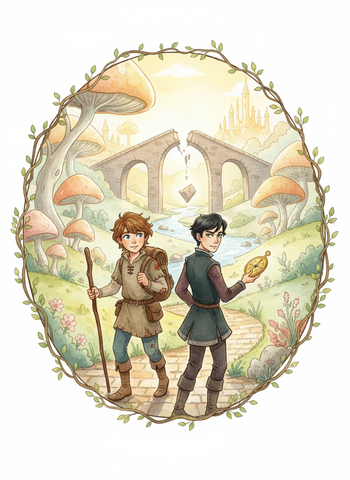
Two brothers, one honest and one treacherous, travel the world together until a broken promise nearly costs the honest one everything.
Once on a time there were two brothers; one was called True, and the other Untrue. True was always upright and good towards all, but Untrue was bad and full of lies, so that no one could believe what he said. Their mother was a widow, and hadn’t much to live on; so when her sons had grown up, she was forced to send them away, that they might earn their bread in the world. Each got a little scrip with some food in it, and then they went their way.
Érase una vez dos hermanos; uno se llamaba Fiel, y el otro Falso. Fiel era siempre recto y bueno con todos, pero Falso era malo y estaba lleno de mentiras, de modo que nadie podía creer lo que decía. Su madre era viuda, y no tenía mucho con qué vivir; así que cuando sus hijos crecieron, se vio obligada a enviarlos lejos, para que se ganaran el pan en el mundo. Cada uno recibió un pequeño hatillo con algo de comida, y luego siguieron su camino.
Now, when they had walked till evening, they sat down on a windfall in the wood, and took out their scraps, for they were hungry after walking the whole day, and thought a morsel of food would be sweet enough.
Ahora bien, cuando hubieron caminado hasta el atardecer, se sentaron sobre un árbol caído en el bosque, y sacaron sus provisiones, pues tenían hambre después de caminar todo el día, y pensaron que un bocado de comida les sabría a gloria.
“If you’re of my mind”, said Untrue, “I think we had better eat out of your scrip, so long as there is anything in it, and after that we can take to mine.”
—Si te parece bien —dijo Falso—, creo que sería mejor comer de tu hatillo, mientras quede algo en él, y después podemos recurrir al mío.
Yes! True was well pleased with this, so they fell to eating, but Untrue got all the best bits, and stuffed himself with them, while True got only the burnt crusts and scraps.
¡Sí! Fiel quedó muy contento con esto, así que se pusieron a comer, pero Falso se quedó con todos los mejores bocados, y se atracó con ellos, mientras Fiel solo tuvo las cortezas quemadas y las sobras.
Next morning they broke their fast off True’s food, and they dined off it too, and then there was nothing left in his scrip. So when they had walked till late at night, and were ready to eat again, True wanted to eat out of his brother’s scrip, but Untrue said “No”, the food was his, and he had only enough for himself.
A la mañana siguiente rompieron el ayuno con la comida de Fiel, y también almorzaron de ella, y luego ya no quedó nada en su hatillo. Así que cuando hubieron caminado hasta bien entrada la noche, y estaban listos para comer otra vez, Fiel quiso comer del hatillo de su hermano, pero Falso dijo «no», que la comida era suya, y que solo tenía suficiente para él mismo.
“Nay! but you know you ate out of my scrip so long as there was anything in it”, said True.
—¡Vaya! Pero tú sabes que comiste de mi hatillo mientras quedó algo en él —dijo Fiel.
“All very fine, I daresay”, answered Untrue; “but if you are such a fool as to let others eat up your food before your face, you must make the best of it; for now all you have to do is to sit here and starve.”
—Muy bonito, sin duda —respondió Falso—; pero si eres tan tonto como para dejar que otros se coman tu comida delante de tus narices, tendrás que arreglártelas; porque ahora lo único que te queda es sentarte aquí y morirte de hambre.
“Very well!” said True, “you’re Untrue by name and untrue by nature; so you have been, and so you will be all your life long.”
—¡Muy bien! —dijo Fiel—, te llamas Falso y eres falso por naturaleza; así has sido, y así serás toda tu vida.
Now when Untrue heard this, he flew into a rage, and rushed at his brother, and plucked out both his eyes. “Now, try if you can see whether folk are untrue or not, you blind buzzard!” and so saying, he ran away and left him.
Al oír esto, Falso se puso furioso, y se abalanzó sobre su hermano, y le arrancó los dos ojos. —¡Ahora, a ver si puedes ver si la gente es falsa o no, buitre ciego! —y diciendo esto, echó a correr y lo dejó allí.
Poor True! there he went walking along and feeling his way through the thick wood. Blind and alone, he scarce knew which way to turn, when all at once he caught hold of the trunk of a great bushy lime-tree, so he thought he would climb up into it, and sit there till the night was over for fear of the wild beasts.
¡Pobre Fiel! Allí iba caminando y tanteando su camino a través del bosque espeso. Ciego y solo, apenas sabía hacia dónde volverse, cuando de pronto agarró el tronco de un gran tilo frondoso, así que pensó que subiría a él, y se sentaría allí hasta que pasara la noche por miedo a las bestias salvajes.
“When the birds begin to sing”, he said to himself, “then I shall know it is day, and I can try to grope my way farther on.” So he climbed up into the lime-tree. After he had sat there a little time, he heard how some one came and began to make a stir and clatter under the tree, and soon after others came; and when they began to greet one another, he found out it was Bruin the bear, and Greylegs the wolf, and Slyboots the fox, and Longears the hare who had come to keep St. John’s eve under the tree.
—Cuando los pájaros empiecen a cantar —se dijo a sí mismo—, entonces sabré que es de día, y podré tratar de tantear mi camino más adelante. —Así que subió al tilo. Después de haber estado sentado allí un rato, oyó cómo alguien llegaba y empezaba a hacer bullicio y estrépito bajo el árbol, y poco después llegaron otros; y cuando empezaron a saludarse, se dio cuenta de que eran Oso el osezno, y Patigrís el lobo, y Astuto el zorro, y Orejilargas la liebre, que habían venido a celebrar la víspera de San Juan bajo el árbol.
So they began to eat and drink, and be merry; and when they had done eating, they fell to gossipping together. At last the Fox said:
Así que empezaron a comer y beber, y a divertirse; y cuando terminaron de comer, se pusieron a chismorrear entre ellos. Por fin el Zorro dijo:
“Shan’t we, each of us, tell a little story while we sit here?” Well! the others had nothing against that. It would be good fun, they said, and the Bear began; for you may fancy he was king of the company.
—¿No deberíamos, cada uno de nosotros, contar una pequeña historia mientras estamos aquí sentados? —¡Bueno! los demás no tuvieron nada en contra. Sería divertido, dijeron, y el Oso empezó; pues os podéis imaginar que era el rey de la compañía.
“The king of England”, said Bruin, “has such bad eyesight, he can scarce see a yard before him; but if he only came to this lime-tree in the morning, while the dew is still on the leaves, and took and rubbed his eyes with the dew, he would get back his sight as good as ever.”
—El rey de Inglaterra —dijo Oso— tiene tan mala vista, que apenas puede ver a un metro delante de él; pero si tan solo viniera a este tilo por la mañana, mientras el rocío aún está sobre las hojas, y se frotara los ojos con el rocío, recuperaría la vista tan buena como siempre.
“Very true!” said Greylegs. “The king of England has a deaf and dumb daughter too; but if he only knew what I know, he would soon cure her. Last year she went to the communion. She let a crumb of the bread fall out of her mouth, and a great toad came and swallowed it down; but if they only dug up the chancel floor, they would find the toad sitting right under the altar rails, with the bread still sticking in his throat. If they were to cut the toad open and take and give the bread to the princess, she would be like other folk again as to her speech and hearing.”
—¡Muy cierto! —dijo Patigrís—. El rey de Inglaterra también tiene una hija sorda y muda; pero si tan solo supiera lo que yo sé, pronto la curaría. El año pasado ella fue a comulgar. Se le cayó una miga del pan de la boca, y un gran sapo vino y se la tragó; pero si tan solo cavaran el suelo del presbiterio, encontrarían al sapo sentado justo debajo de la baranda del altar, con el pan todavía atascado en su garganta. Si abrieran al sapo y le sacaran el pan y se lo dieran a la princesa, ella volvería a ser como los demás en cuanto al habla y al oído.
“That’s all very well”, said the Fox; “but if the king of England knew what I know, he would not be so badly off for water in his palace; for under the great stone, in his palace-yard, is a spring of the clearest water one could wish for, if he only knew to dig for it there.”
—Eso está muy bien —dijo el Zorro—; pero si el rey de Inglaterra supiera lo que yo sé, no andaría tan mal de agua en su palacio; pues bajo la gran piedra, en el patio de su palacio, hay un manantial del agua más clara que se pudiera desear, si tan solo supiera que debe cavar allí.
“Ah!” said the Hare in a small voice; “the king of England has the finest orchard in the whole land, but it does not bear so much as a crab, for there lies a heavy gold chain in three turns round the orchard. If he got that dug up, there would not be a garden like it for bearing in all his kingdom.”
—¡Ah! —dijo la Liebre con vocecita tímida—; el rey de Inglaterra tiene el mejor huerto de toda la tierra, pero no da ni siquiera una manzana silvestre, porque hay una pesada cadena de oro enterrada dando tres vueltas alrededor del huerto. Si la desenterrara, no habría un huerto igual para dar fruto en todo su reino.
“Very true, I dare say”, said the Fox; “but now it’s getting very late, and we may as well go home.”
—Muy cierto, sin duda —dijo el Zorro—; pero ahora se está haciendo muy tarde, y bien podríamos irnos a casa.
So they all went away together.
Así que todos se marcharon juntos.
After they were gone, True fell asleep as he sat up in the tree; but when the birds began to sing at dawn, he woke up, and took the dew from the leaves, and rubbed his eyes with it, and so got his sight back as good as it was before Untrue plucked his eyes out.
Después de que se fueron, Fiel se quedó dormido sentado allí arriba en el árbol; pero cuando los pájaros empezaron a cantar al amanecer, despertó, y tomó el rocío de las hojas, y se frotó los ojos con él, y así recuperó la vista, tan buena como antes de que Falso se la arrancara.
Then he went straight to the king of England’s palace, and begged for work, and got it on the spot. So one day the king came out into the palace-yard, and when he had walked about a bit, he wanted to drink out of his pump; for you must know the day was hot, and the king very thirsty; but when they poured him out a glass, it was so muddy, and nasty, and foul, that the king got quite vexed.
Entonces se dirigió directamente al palacio del rey de Inglaterra, y pidió trabajo, y lo consiguió en el acto. Así que un día el rey salió al patio del palacio, y cuando hubo caminado un poco, quiso beber de su bomba de agua; pues debéis saber que el día era caluroso, y el rey estaba muy sediento; pero cuando le sirvieron un vaso, estaba tan turbio, y desagradable, y sucio, que el rey se quedó bastante contrariado.
“I don’t think there’s ever a man in my whole kingdom who has such bad water in his yard as I, and yet I bring it in pipes from far, over hill and dale”, cried out the king. “Like enough, your Majesty”, said True; “but if you would let me have some men to help me to dig up this great stone which lies here in the middle of your yard, you would soon see good water, and plenty of it.”
—No creo que haya nunca un hombre en todo mi reino que tenga tan mala agua en su patio como yo, y sin embargo la traigo por tuberías desde lejos, sobre colinas y valles —exclamó el rey—. —Es bien posible, majestad —dijo Fiel—; pero si me dejarais tener algunos hombres para ayudarme a cavar y sacar esta gran piedra que yace aquí en medio de vuestro patio, pronto veríais buena agua, y en abundancia.
Well! the king was willing enough; and they had scarcely got the stone well out, and dug under it a while, before a jet of water sprang out high up into the air, as clear and full as if it came out of a conduit, and clearer water was not to be found in all England.
¡Bien! el rey estuvo bastante dispuesto; y apenas habían sacado la piedra y cavado un poco debajo de ella, cuando un chorro de agua brotó muy alto en el aire, tan claro y abundante como si saliera de un acueducto, y no se podía encontrar agua más clara en toda Inglaterra.
A little while after the king was out in his palace-yard again, and there came a great hawk flying after his chicken, and all the king’s men began to clap their hands and bawl out, “There he flies!” “There he flies!” The king caught up his gun and tried to shoot the hawk, but he couldn’t see so far, so he fell into great grief.
Un poco después el rey estaba de nuevo en el patio de su palacio, y llegó volando un gran halcón tras sus pollos, y todos los hombres del rey empezaron a aplaudir y a gritar: «¡Allí vuela!» «¡Allí vuela!» El rey tomó su escopeta y trató de disparar al halcón, pero no podía ver tan lejos, así que se sumió en gran pesar.
“Would to Heaven”, he said, “there was any one who could tell me a cure for my eyes; for I think I shall soon go quite blind!”
—Pluguiera al Cielo —dijo—, que hubiera alguien que pudiera decirme un remedio para mis ojos; ¡pues creo que pronto me quedaré completamente ciego!
“I can tell you one soon enough”, said True; and then he told the king what he had done to cure his own eyes, and the king set off that very afternoon to the lime-tree, as you may fancy, and his eyes were quite cured as soon as he rubbed them with the dew which was on the leaves in the morning. From that time forth there was no one whom the king held so dear as True, and he had to be with him wherever he went, both at home and abroad.
—Yo puedo deciros uno enseguida —dijo Fiel; y entonces le contó al rey lo que había hecho para curar sus propios ojos, y el rey partió esa misma tarde hacia el tilo, como podéis imaginar, y sus ojos quedaron completamente curados en cuanto se los frotó con el rocío que había sobre las hojas por la mañana. Desde entonces no hubo nadie a quien el rey tuviera tan querido como a Fiel, y este tenía que estar con él dondequiera que fuese, tanto en casa como en el extranjero.
So one day, as they were walking together in the orchard, the king said, “I can’t tell how it is that I can’t! there isn’t a man in England who spends so much on his orchard as I, and yet I can’t get one of the trees to bear so much as a crab.”
Así que un día, mientras caminaban juntos por el huerto, el rey dijo: —No sé cómo puede ser que no pueda; no hay hombre en Inglaterra que gaste tanto en su huerto como yo, y sin embargo no logro que ninguno de los árboles dé siquiera una manzana silvestre.
“Well! well!” said True; “if I may have what lies three times twisted round your orchard, and men to dig it up, your orchard will bear well enough.”
—¡Bueno, bueno! —dijo Fiel—; si pudiera tener lo que yace enrollado tres veces alrededor de vuestro huerto, y hombres para desenterrarlo, vuestro huerto dará fruto bastante bien.
Yes! the king was quite willing, so True got men and began to dig, and at last he dug up the whole gold chain. Now True was a rich man; far richer indeed than the king himself, but still the king was well pleased, for his orchard bore so that the boughs of the trees hung down to the ground, and such sweet apples and pears nobody had ever tasted.
¡Sí! el rey estuvo bastante dispuesto, así que Fiel consiguió hombres y empezó a cavar, y al fin desenterró toda la cadena de oro. Ahora Fiel era un hombre rico; en verdad mucho más rico que el propio rey, pero aun así el rey estaba muy contento, pues su huerto dio tanto fruto que las ramas de los árboles colgaban hasta el suelo, y nadie había probado nunca manzanas y peras tan dulces.
Another day too the king and True were walking about, and talking together, when the princess passed them, and the king was quite downcast when he saw her.
Otro día también el rey y Fiel andaban paseando y conversando juntos, cuando la princesa pasó junto a ellos, y el rey se quedó bastante abatido al verla.
“Isn’t it a pity, now, that so lovely a princess as mine should want speech and hearing”, he said to True.
—¿No es una lástima, ahora, que una princesa tan encantadora como la mía carezca de habla y de oído? —le dijo a Fiel.
“Ay, but there is a cure for that”, said True.
—Sí, pero hay un remedio para eso —dijo Fiel.
When the king heard that, he was so glad that he promised him the princess to wife, and half his kingdom into the bargain, if he could get her right again. So True took a few men, and went into the church, and dug up the toad which sat under the altar-rails. Then he cut open the toad, and took out the bread and gave it to the king’s daughter; and from that hour she got back her speech, and could talk like other people.
Cuando el rey oyó esto, se puso tan contento que le prometió a la princesa por esposa, y la mitad de su reino además, si lograba curarla. Así que Fiel tomó a unos cuantos hombres, y entró en la iglesia, y desenterró al sapo que estaba sentado bajo la baranda del altar. Luego abrió al sapo, y sacó el pan y se lo dio a la hija del rey; y desde aquella hora ella recuperó el habla, y pudo hablar como las demás personas.
Now True was to have the princess, and they got ready for the bridal feast, and such a feast had never been seen before; it was the talk of the whole land. Just as they were in the midst of dancing the bridal-dance in came a beggar lad, and begged for a morsel of food, and he was so ragged and wretched that every one crossed themselves when they looked at him; but True knew him at once, and saw that it was Untrue, his brother.
Así que Fiel se casaría con la princesa, y se prepararon para el banquete nupcial, y nunca se había visto un banquete semejante; fue la comidilla de toda la tierra. Justo cuando estaban en medio de la danza nupcial, entró un muchacho mendigo, y pidió un bocado de comida, y estaba tan andrajoso y miserable que todos se santiguaron al mirarlo; pero Fiel lo reconoció al instante, y vio que era Falso, su hermano.
“Do you know me again?” said True.
—¿Me reconoces? —dijo Fiel.
“Oh! where should such a one as I ever have seen so great a lord”, said Untrue.
—¡Oh! ¿Dónde habría podido uno como yo ver jamás a un señor tan grande? —dijo Falso.
“Still you have seen me before”, said True. “It was I whose eyes you plucked out a year ago this very day. Untrue by name, and untrue by nature; so I said before, and so I say now; but you are still my brother, and so you shall have some food. After that, you may go to the lime-tree where I sat last year; if you hear anything that can do you good, you will be lucky.”
—Sin embargo, ya me has visto antes —dijo Fiel—. Fui yo a quien le arrancaste los ojos hace un año, este mismo día. Te llamas Falso, y falso eres por naturaleza; así lo dije antes, y así lo digo ahora; pero sigues siendo mi hermano, y por eso tendrás algo de comida. Después de eso, puedes ir al tilo donde me senté el año pasado; si oyes algo que te pueda hacer bien, tendrás suerte.
So Untrue did not wait to be told twice. “If True has got so much good by sitting in the lime-tree, that in one year he has come to be king over half England, what good may not I get”, he thought. So he set off and climbed up into the lime-tree. He had not sat there long, before all the beasts came as before, and ate and drank, and kept St. John’s eve under the tree.
Así que Falso no esperó a que se lo dijeran dos veces. «Si Fiel ha conseguido tanto bien sentándose en el tilo, que en un año ha llegado a ser rey de media Inglaterra, ¿qué bien no podría conseguir yo?», pensó. Así que se puso en marcha y subió al tilo. No llevaba mucho tiempo sentado allí, cuando todas las bestias llegaron como antes, y comieron y bebieron, y celebraron la víspera de San Juan bajo el árbol.
When they had left off eating, the Fox wished that they should begin to tell stories, and Untrue got ready to listen with all his might, till his ears were almost fit to fall off. But Bruin the bear was surly, and growled and said:
Cuando dejaron de comer, el Zorro deseó que empezaran a contar historias, y Falso se dispuso a escuchar con todas sus fuerzas, hasta que las orejas casi se le caían. Pero Oso el osezno estaba malhumorado, y gruñó y dijo:
“Some one has been chattering about what we said last year, and so now we will hold our tongues about what we know”; and with that the beasts bade one another “Good-night”, and parted, and Untrue was just as wise as he was before, and the reason was, that his name was Untrue, and his nature untrue too.
—Alguien ha estado chismorreando sobre lo que dijimos el año pasado, y por eso ahora nos callaremos sobre lo que sabemos —y con eso las bestias se dieron las «buenas noches» unas a otras, y se separaron, y Falso se quedó tan sabio como antes, y la razón era que su nombre era Falso, y su naturaleza también era falsa.
