An Unfinished Story
A free C1-level English story for language learners, readable online in 7 languages, with an option to listen via the free Storyteller app.
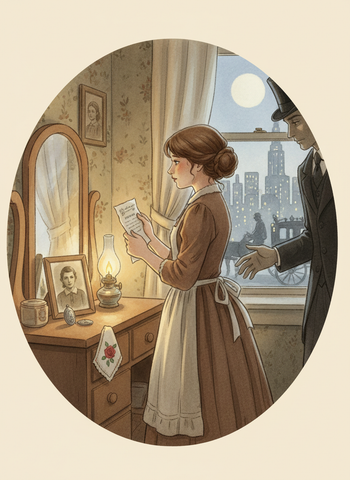
A shop-girl surviving New York on six dollars a week accepts a dinner invitation from a wealthy 'swell' with a dangerous reputation — until something on her dresser makes her change her mind.
We no longer groan and heap ashes upon our heads when the flames of Tophet are mentioned. For, even the preachers have begun to tell us that God is radium, or ether or some scientific compound, and that the worst we wicked ones may expect is a chemical reaction. This is a pleasing hypothesis; but there lingers yet some of the old, goodly terror of orthodoxy.
如今,一提起地狱的烈焰,我们已不再呻吟哀号、把灰烬撒在头上了。因为,就连传教士们也开始告诉我们,上帝其实是镭,或是以太,或是某种科学化合物,而我们这些作恶之人最坏的下场,不过是一场化学反应罢了。这是个令人愉悦的假设;可正统信仰里那份古老而美好的恐惧,却依然挥之不去。
There are but two subjects upon which one may discourse with a free imagination, and without the possibility of being controverted. You may talk of your dreams; and you may tell what you heard a parrot say. Both Morpheus and the bird are incompetent witnesses; and your listener dare not attack your recital. The baseless fabric of a vision, then, shall furnish my theme—chosen with apologies and regrets instead of the more limited field of pretty Polly’s small talk.
只有两个话题,一个人可以尽情发挥想象,畅所欲言,而绝无被人反驳的可能。你可以谈论你的梦境;也可以讲述你听见鹦鹉说过什么话。梦神和那只鸟都算不得可靠的证人;听你讲述的人也不敢质疑你的说辞。于是,这虚无缥缈的梦境,便成了我此番要讲的题材——带着几分歉意和遗憾选定的题材,而非那更为狭窄的、漂亮鹦鹉闲言碎语的领域。
I had a dream that was so far removed from the higher criticism that it had to do with the ancient, respectable, and lamented bar-of-judgment theory.
我做了一个梦,这梦与那些高深的批评理论相去甚远,讲的却是那古老、体面而又令人叹惋的最后审判理论。
Gabriel had played his trump; and those of us who could not follow suit were arraigned for examination. I noticed at one side a gathering of professional bondsmen in solemn black and collars that buttoned behind; but it seemed there was some trouble about their real estate titles; and they did not appear to be getting any of us out.
加百列已经吹响了他的号角;我们这些跟不上趟的人,便被押上前去受审。我注意到一旁聚着一群身穿庄重黑袍、领口在背后系扣的职业保释人;但他们的地产权状似乎出了些麻烦,看起来一时半会儿谁也保不出去。
A fly cop—an angel policeman—flew over to me and took me by the left wing. Near at hand was a group of very prosperous-looking spirits arraigned for judgment.
一位飞行警察——一位天使警察——飞到我跟前,抓住了我的左翼。附近站着一群看起来颇为富态的灵魂,正等着受审。
“Do you belong with that bunch?” the policeman asked.
“你是跟那一伙的吗?”那警察问道。
“Who are they?” was my answer.
“他们是什么人?”我反问道。
“Why,” said he, “they are—”
“哦,”他说,“他们是——”
But this irrelevant stuff is taking up space that the story should occupy.
可这些无关紧要的闲话,占用了本该属于正文的篇幅。
Dulcie worked in a department store. She sold Hamburg edging, or stuffed peppers, or automobiles, or other little trinkets such as they keep in department stores. Of what she earned, Dulcie received six dollars per week. The remainder was credited to her and debited to somebody else’s account in the ledger kept by G–––– Oh, primal energy, you say, Reverend Doctor—Well then, in the Ledger of Primal Energy.
达西在一家百货公司做工。她卖的是汉堡花边,或者酿馅甜椒,或者汽车,又或者百货公司里常有的其他各色小玩意儿。她挣的钱里,达西每周能拿到六美元。剩下的部分,都记在了她的账上,而由旁人来偿——记在了那位造物主……哦,牧师阁下,您说是原初能量吗——好吧,那就记在“原初能量总账”上了。
During her first year in the store, Dulcie was paid five dollars per week. It would be instructive to know how she lived on that amount. Don’t care? Very well; probably you are interested in larger amounts. Six dollars is a larger amount. I will tell you how she lived on six dollars per week.
在店里做工的头一年,达西每周只拿五美元。若能知道她当时是怎么靠这点钱过活的,倒是很有教益。你不关心?那好;你大概对更大的数目更感兴趣。六美元就是个更大的数目。我这就告诉你,她是怎么靠每周六美元过活的。
One afternoon at six, when Dulcie was sticking her hat-pin within an eighth of an inch of her medulla oblongata, she said to her chum, Sadie—the girl that waits on you with her left side:
一天下午六点,达西正把帽针插到离她后脑勺不到八分之一英寸的地方,她对她的好友萨迪——那个总是侧着身子招呼你的姑娘——说道:
“Say, Sade, I made a date for dinner this evening with Piggy.”
“喂,萨迪,我今晚跟皮吉约好了一起吃饭。”
“You never did!” exclaimed Sadie admiringly. “Well, ain’t you the lucky one? Piggy’s an awful swell; and he always takes a girl to swell places. He took Blanche up to the Hoffman House one evening, where they have swell music, and you see a lot of swells. You’ll have a swell time, Dulce.”
“真的假的!”萨迪羡慕地叫道,“哎呀,你可真走运!皮吉可是个大阔佬,他总带姑娘去阔气的地方。有一回他带布兰奇去霍夫曼大酒店,那儿有阔气的音乐,还能见着一大堆阔佬。你这回一定能玩得阔气极了,达西。”
Dulcie hurried homeward. Her eyes were shining, and her cheeks showed the delicate pink of life’s—real life’s—approaching dawn. It was Friday; and she had fifty cents left of her last week’s wages.
达西匆匆往家赶去。她双眼发亮,脸颊泛起一层淡淡的粉色,那是生活——真正的生活——曙光初现的颜色。那天是星期五;上周的工钱她还剩五十美分。
The streets were filled with the rush-hour floods of people. The electric lights of Broadway were glowing—calling moths from miles, from leagues, from hundreds of leagues out of darkness around to come in and attend the singeing school. Men in accurate clothes, with faces like those carved on cherry stones by the old salts in sailors’ homes, turned and stared at Dulcie as she sped, unheeding, past them. Manhattan, the night-blooming cereus, was beginning to unfold its dead-white, heavy-odoured petals.
街上挤满了下班高峰涌动的人潮。百老汇的电灯亮了起来——从数英里、数十英里,乃至周围几百英里的黑暗中,把飞蛾一般的人们唤来,招呼他们进来,接受这场灼烧的洗礼。那些衣着考究的男人,脸庞就像水手之家的老水手们在樱桃核上雕出来的人脸,一个个转过身来,直勾勾地盯着匆匆走过、毫不理会的达西。曼哈顿,这朵夜间绽放的昙花,正开始舒展它那死白色、气味浓重的花瓣。
Dulcie stopped in a store where goods were cheap and bought an imitation lace collar with her fifty cents. That money was to have been spent otherwise—fifteen cents for supper, ten cents for breakfast, ten cents for lunch. Another dime was to be added to her small store of savings; and five cents was to be squandered for licorice drops—the kind that made your cheek look like the toothache, and last as long. The licorice was an extravagance—almost a carouse—but what is life without pleasures?
达西在一家便宜货商店停下脚步,花掉她那五十美分,买了一条仿蕾丝的假领子。那笔钱本该另作他用——十五美分吃晚饭,十美分吃早饭,十美分吃午饭。再有一枚一角硬币本该添进她那点微薄的积蓄;还有五美分,本该挥霍在甘草糖上——就是那种会把你的腮帮子撑得像牙疼似的、而且能含很久的糖。买甘草糖实在是种奢侈——几乎称得上放纵了——可没有一点乐趣的日子,还算什么日子呢?
Dulcie lived in a furnished room. There is this difference between a furnished room and a boarding-house. In a furnished room, other people do not know it when you go hungry.
达西住在一间带家具出租的房间里。带家具的房间和寄宿公寓之间有这样一个区别:住在带家具的房间里,你饿肚子的时候,旁人是不会知道的。
Dulcie went up to her room—the third floor back in a West Side brownstone-front. She lit the gas. Scientists tell us that the diamond is the hardest substance known. Their mistake. Landladies know of a compound beside which the diamond is as putty. They pack it in the tips of gas-burners; and one may stand on a chair and dig at it in vain until one’s fingers are pink and bruised. A hairpin will not remove it; therefore let us call it immovable.
达西上楼回到她的房间——那是西区一栋褐石公寓三楼后间。她点起了煤气灯。科学家们告诉我们,钻石是已知最坚硬的物质。他们错了。房东太太们知道有一种东西,钻石在它面前简直如同软泥。她们把这东西塞进煤气灯头的接口里;一个人尽可以站到椅子上,拼命去抠,直抠得手指又红又疼,也是白费力气。发夹也弄不掉它;所以我们不妨就称它为“纹丝不动”。
So Dulcie lit the gas. In its one-fourth-candlepower glow we will observe the room.
于是达西点起了煤气灯。就着这四分之一烛光的微光,让我们来打量一下这个房间。
Couch-bed, dresser, table, washstand, chair—of this much the landlady was guilty. The rest was Dulcie’s. On the dresser were her treasures—a gilt china vase presented to her by Sadie, a calendar issued by a pickle works, a book on the divination of dreams, some rice powder in a glass dish, and a cluster of artificial cherries tied with a pink ribbon.
长沙发床、梳妆台、桌子、脸盆架、椅子——这些都是房东太太的责任所在。其余的都是达西自己的东西。梳妆台上摆着她的宝贝——一只萨迪送她的镀金瓷花瓶、一份腌菜厂发的月历、一本讲解梦境占卜的书、玻璃碟子里的一点米粉,还有一束用粉色丝带扎着的人造樱桃。
Against the wrinkly mirror stood pictures of General Kitchener, William Muldoon, the Duchess of Marlborough, and Benvenuto Cellini. Against one wall was a plaster of Paris plaque of an O’Callahan in a Roman helmet. Near it was a violent oleograph of a lemon-coloured child assaulting an inflammatory butterfly. This was Dulcie’s final judgment in art; but it had never been upset. Her rest had never been disturbed by whispers of stolen copes; no critic had elevated his eyebrows at her infantile entomologist.
在那面起了皱纹的镜子前,摆着基钦纳将军、威廉·穆尔登、马尔伯勒公爵夫人,以及本韦努托·切利尼的照片。墙上挂着一块灰泥浮雕,塑的是一位头戴罗马式头盔的欧卡拉汉。旁边挂着一幅色彩艳丽的油版画,画的是一个柠檬色的孩子在扑打一只脾气火爆的蝴蝶。这便是达西对艺术的最终定论;而这定论从未被推翻过。她从不曾因为“偷来的斗篷”之类的窃窃私语而失眠;也从没有哪位评论家对她那幼稚的“昆虫学家”挑起眉毛表示不屑。
Piggy was to call for her at seven. While she swiftly makes ready, let us discreetly face the other way and gossip.
皮吉约好七点来接她。趁她手脚麻利地梳妆打扮的当口,让我们识趣地转过身去,聊聊闲话。
For the room, Dulcie paid two dollars per week. On week-days her breakfast cost ten cents; she made coffee and cooked an egg over the gaslight while she was dressing. On Sunday mornings she feasted royally on veal chops and pineapple fritters at “Billy’s” restaurant, at a cost of twenty-five cents—and tipped the waitress ten cents. New York presents so many temptations for one to run into extravagance.
这间房,达西每周付两美元房租。工作日里,她的早饭花她十美分;她一边穿衣服,一边在煤气灯上煮咖啡、煎个鸡蛋。到了星期天早上,她便去“比利家”餐馆,花上二十五美分,好好享用一顿小牛排配菠萝松饼的盛宴——外加给女招待十美分小费。纽约这地方,实在有太多诱人挥霍的机会了。
She had her lunches in the department-store restaurant at a cost of sixty cents for the week; dinners were $1.05. The evening papers—show me a New Yorker going without his daily paper!—came to six cents; and two Sunday papers—one for the personal column and the other to read—were ten cents. The total amounts to $4.76. Now, one has to buy clothes, and—
她的午饭是在百货公司的餐厅里吃的,一周花六十美分;晚饭则是一美元零五分。晚报——哪个纽约人肯不看每日的晚报呢!——要六美分;还有两份星期日的报纸——一份看社交专栏,另一份用来读正文——要十美分。总共加起来是四美元七十六美分。眼下呢,一个人总得添置些衣裳,而且——
I give it up. I hear of wonderful bargains in fabrics, and of miracles performed with needle and thread; but I am in doubt. I hold my pen poised in vain when I would add to Dulcie’s life some of those joys that belong to woman by virtue of all the unwritten, sacred, natural, inactive ordinances of the equity of heaven. Twice she had been to Coney Island and had ridden the hobby-horses. ’Tis a weary thing to count your pleasures by summers instead of by hours.
我实在算不下去了。我听说布料上有种种令人称奇的便宜货,针线之间也能变出种种奇迹;可我心里终究存着疑虑。每当我想为达西的生活添上几分那种本该因天理的种种不成文、神圣、天然而又缄默的公道而属于女性的欢乐时,我握着笔,却无从下笔。她只去过两次科尼岛,骑过那儿的木马。若要论起自己的欢乐时,不是以钟点,而是要以一个个夏天来计数,那日子该有多么疲惫啊。
Piggy needs but a word. When the girls named him, an undeserving stigma was cast upon the noble family of swine. The words-of-three-letters lesson in the old blue spelling book begins with Piggy’s biography. He was fat; he had the soul of a rat, the habits of a bat, and the magnanimity of a cat … He wore expensive clothes; and was a connoisseur in starvation.
关于皮吉,只需寥寥数语。姑娘们给他取了这个绰号,实在是给那高贵的猪族蒙上了一层不该有的污名。旧时那本蓝皮拼字课本里,三字母单词那一课的开篇例句,简直就是皮吉的生平写照。他体态肥胖;他有老鼠般的心肠、蝙蝠般的习性,还有猫一般的“慷慨”……他穿着昂贵的衣裳,堪称饿人的行家。
He could look at a shop-girl and tell you to an hour how long it had been since she had eaten anything more nourishing than marshmallows and tea. He hung about the shopping districts, and prowled around in department stores with his invitations to dinner. Men who escort dogs upon the streets at the end of a string look down upon him. He is a type; I can dwell upon him no longer; my pen is not the kind intended for him; I am no carpenter.
他只消看一眼一个女店员,便能准确说出,她有多久没吃过棉花糖和茶以外更有营养的东西了,精确到钟点。他在购物区一带闲荡,在各家百货公司里转悠,四处抛出他那晚宴的邀请。就连那些牵着绳子遛狗上街的男人,都瞧不起他。他是这么一类人;我实在不愿再多谈他了;我这支笔不是为他这种人准备的;我可不是个木匠。
At ten minutes to seven Dulcie was ready. She looked at herself in the wrinkly mirror. The reflection was satisfactory. The dark blue dress, fitting without a wrinkle, the hat with its jaunty black feather, the but-slightly-soiled gloves—all representing self-denial, even of food itself—were vastly becoming.
到差十分七点的时候,达西已经收拾停当。她对着那面起皱的镜子照了照自己。镜中的影像令人满意。深蓝色的裙子,妥帖合身,没有一丝皱褶;帽子上那根俏皮的黑色羽毛;那副只沾了一点点污渍的手套——这一切,都是靠节衣缩食、甚至不惜克扣自己的口粮换来的——却显得格外相衬。
Dulcie forgot everything else for a moment except that she was beautiful, and that life was about to lift a corner of its mysterious veil for her to observe its wonders. No gentleman had ever asked her out before. Now she was going for a brief moment into the glitter and exalted show.
达西一时忘却了一切,只觉得自己美丽极了,觉得生活正要为她掀开神秘面纱的一角,好让她一窥其中的奇妙。从来没有哪位绅士约她出去过。此刻,她就要走进那片璀璨与荣耀的短暂一瞬。
The girls said that Piggy was a “spender.” There would be a grand dinner, and music, and splendidly dressed ladies to look at, and things to eat that strangely twisted the girls’ jaws when they tried to tell about them. No doubt she would be asked out again. There was a blue pongee suit in a window that she knew—by saving twenty cents a week instead of ten, in—let’s see—Oh, it would run into years! But there was a second-hand store in Seventh Avenue where—
姑娘们都说皮吉是个“大方人”。今晚定会有一顿丰盛的晚餐,有音乐,有衣着华丽的女士可供欣赏,还有那些让姑娘们一提起来舌头都打结的美味佳肴。想必以后他还会再约她出去。她记得第七大道橱窗里有一套蓝色府绸套装——只要每周省下二十美分,而不是十美分,攒上——让我算算——哦,那得攒上好些年!不过第七大道上还有一家旧货店,那儿……
Somebody knocked at the door. Dulcie opened it. The landlady stood there with a spurious smile, sniffing for cooking by stolen gas.
有人敲门。达西开了门。房东太太站在门口,脸上挂着虚情假意的笑容,一边嗅着,看是不是有人偷用煤气做饭。
“A gentleman’s downstairs to see you,” she said. “Name is Mr. Wiggins.”
“楼下有位先生来看你,”她说,“他说他叫威金斯先生。”
By such epithet was Piggy known to unfortunate ones who had to take him seriously.
那些不得不认真对待皮吉的倒霉姑娘们,都是这样称呼他的。
Dulcie turned to the dresser to get her handkerchief; and then she stopped still, and bit her underlip hard. While looking in her mirror she had seen fairyland and herself, a princess, just awakening from a long slumber. She had forgotten one that was watching her with sad, beautiful, stern eyes—the only one there was to approve or condemn what she did. Straight and slender and tall, with a look of sorrowful reproach on his handsome, melancholy face, General Kitchener fixed his wonderful eyes on her out of his gilt photograph frame on the dresser.
达西转身走向梳妆台去拿手帕;随即她停住了脚步,狠狠咬住了下唇。方才对着镜子的时候,她看见的是仙境,还有她自己——一位刚从长眠中苏醒过来的公主。她竟忘了,还有一位正用哀伤、美丽而严峻的目光注视着她——那是这里唯一能够评判她所作所为、或赞许或谴责的人。基钦纳将军身姿挺拔修长,那张俊美而忧郁的脸上带着痛心的责备之色,从梳妆台上那镀金的相框里,将他那双奇妙的眼睛牢牢盯在她身上。
Dulcie turned like an automatic doll to the landlady.
达西像个上了发条的木偶似的,转身对着房东太太。
“Tell him I can’t go,” she said dully. “Tell him I’m sick, or something. Tell him I’m not going out.”
“告诉他我不能去,”她木然地说道,“告诉他我病了,或者随便什么理由。告诉他我不出去了。”
After the door was closed and locked, Dulcie fell upon her bed, crushing her black tip, and cried for ten minutes. General Kitchener was her only friend. He was Dulcie’s ideal of a gallant knight. He looked as if he might have a secret sorrow, and his wonderful moustache was a dream, and she was a little afraid of that stern yet tender look in his eyes. She used to have little fancies that he would call at the house sometime, and ask for her, with his sword clanking against his high boots. Once, when a boy was rattling a piece of chain against a lamp-post she had opened the window and looked out.
门关上锁好之后,达西一头扑倒在床上,压皱了她那顶帽子上的黑色羽毛尖,哭了整整十分钟。基钦纳将军是她唯一的朋友。他是达西心目中那位英勇骑士的理想化身。他看起来仿佛怀着某种不为人知的隐痛,他那副奇妙的胡须简直像梦一般,而他眼中那份既严峻又温柔的神情,令她有些畏惧。她曾暗自幻想过,也许有朝一日他会登门来访,问起她来,他那把佩剑会随着他的高筒靴叮当作响。有一回,一个男孩拿一截铁链在路灯柱上哗啦作响,她还特意开窗张望过。
But there was no use. She knew that General Kitchener was away over in Japan, leading his army against the savage Turks; and he would never step out of his gilt frame for her. Yet one look from him had vanquished Piggy that night. Yes, for that night.
可这终究没有用。她知道基钦纳将军此刻远在日本,正率军对抗野蛮的土耳其人;他绝不会为了她,从那镀金的相框里走出来。可就在那晚,他的一个眼神,还是击退了皮吉。是的,至少那一晚是如此。
When her cry was over Dulcie got up and took off her best dress, and put on her old blue kimono. She wanted no dinner. She sang two verses of “Sammy.” Then she became intensely interested in a little red speck on the side of her nose. And after that was attended to, she drew up a chair to the rickety table, and told her fortune with an old deck of cards.
哭完之后,达西起身脱下她最好的那件裙子,换上她那件旧蓝色和服睡袍。她不想吃晚饭了。她唱了两段《萨米》。接着,她全神贯注地研究起自己鼻子侧边一颗小红点来。等这事儿也打理妥当,她便拉过一把椅子,坐到那张摇摇晃晃的桌子旁,用一副旧纸牌给自己算起命来。
“The horrid, impudent thing!” she said aloud. “And I never gave him a word or a look to make him think it!”
“这可恶、放肆的东西!”她大声说道,“我可从没给过他一句话或一个眼神,让他这么想!”
At nine o’clock Dulcie took a tin box of crackers and a little pot of raspberry jam out of her trunk, and had a feast. She offered General Kitchener some jam on a cracker; but he only looked at her as the sphinx would have looked at a butterfly—if there are butterflies in the desert.
九点钟的时候,达西从她的箱子里取出一小铁盒饼干和一小罐覆盆子酱,美美地饱餐了一顿。她拿了一块抹了果酱的饼干请基钦纳将军吃;可他只是望着她,那神情就像斯芬克斯望着一只蝴蝶——假如沙漠里也有蝴蝶的话。
“Don’t eat it if you don’t want to,” said Dulcie. “And don’t put on so many airs and scold so with your eyes. I wonder if you’d be so superior and snippy if you had to live on six dollars a week.”
“你不想吃就别吃,”达西说道,“也别摆出那么一副高高在上的架子,用你的眼神那样责备我。我倒想知道,要是你也得靠每周六美元过活,你还会不会这么自命清高、这么爱挑剔。”
It was not a good sign for Dulcie to be rude to General Kitchener. And then she turned Benvenuto Cellini face downward with a severe gesture. But that was not inexcusable; for she had always thought he was Henry VIII, and she did not approve of him.
对基钦纳将军无礼,对达西来说可不是个好兆头。接着,她又狠狠地一挥手,把本韦努托·切利尼的照片脸朝下扣了过去。不过这倒也情有可原;因为她一直以为他是亨利八世,而她本就不喜欢这个人。
At half-past nine Dulcie took a last look at the pictures on the dresser, turned out the light, and skipped into bed. It’s an awful thing to go to bed with a good-night look at General Kitchener, William Muldoon, the Duchess of Marlborough, and Benvenuto Cellini. This story really doesn’t get anywhere at all. The rest of it comes later—sometime when Piggy asks Dulcie again to dine with him, and she is feeling lonelier than usual, and General Kitchener happens to be looking the other way; and then—
九点半的时候,达西最后看了一眼梳妆台上的那些照片,熄了灯,跳上床去。带着对基钦纳将军、威廉·穆尔登、马尔伯勒公爵夫人,以及本韦努托·切利尼道一声晚安入睡,实在是件挺吓人的事。这个故事其实哪儿也没讲到。剩下的部分留待日后——总有一天,皮吉会再约达西共进晚餐,而她恰好比往常更觉孤单,基钦纳将军又恰好望向别处;到那时候……
As I said before, I dreamed that I was standing near a crowd of prosperous-looking angels, and a policeman took me by the wing and asked if I belonged with them.
正如我先前所说,我梦见自己站在一群看起来颇为富态的天使旁边,一名警察抓住了我的翅膀,问我是不是跟他们一伙的。
“Who are they?” I asked.
“他们是什么人?”我问道。
“Why,” said he, “they are the men who hired working-girls, and paid ’em five or six dollars a week to live on. Are you one of the bunch?”
“哦,”他说,“他们就是那些雇佣女工、只付她们每周五六美元让她们靠这点钱过活的人。你是这一伙的吗?”
“Not on your immortality,” said I. “I’m only the fellow that set fire to an orphan asylum, and murdered a blind man for his pennies.”
“凭我的灵魂发誓,我可不是,”我说道,“我不过是那个放火烧了孤儿院、又为了几个便士谋杀了一个瞎子的家伙罢了。”
