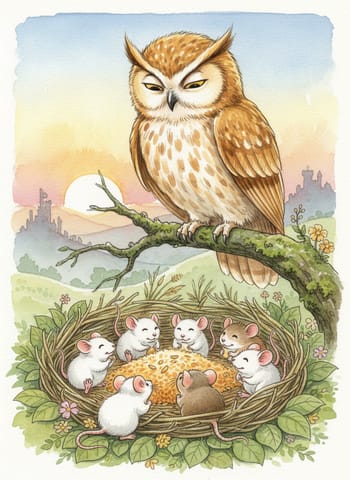
The Mice and the Screech-Owl
قصة إنجليزية مجانية بالمستوى B2 لمتعلمي اللغات، يمكن قراءتها على الإنترنت بلغات عددها 8، مع إمكانية الاستماع إليها عبر تطبيق Storyteller المجاني.
A clever owl keeps captive mice by removing their feet, feeding them grain while keeping them imprisoned — demonstrating that cunning strategy rivals human reasoning.
انتهى المقطع التجريبي! استمع إلى القصة كاملة في تطبيق Storyteller المجاني. حمّل التطبيق
الصوت غير متاح الآن.
It is not always wise to say to your company, "Just listen to this joke" or "What do you think of this for a marvel?" for one can never be sure that the listeners will regard the matter in the same way that the teller does. Yet here is a case that makes an exception to this good rule, and I maintain that it is in truth wonderful, and, although it has the appearance of being a fable, it is in reality absolute fact.
ليس من الحكمة دائمًا أن تقول لمن حولك: «اسمعوا هذه النكتة» أو «ما رأيكم في هذه العجيبة؟»، فلا يمكن أبدًا أن تتيقن من أن المستمعين سينظرون إلى الأمر بالطريقة نفسها التي ينظر بها الراوي. ومع ذلك فهذه حالة تشذ عن هذه القاعدة الجيدة، وأؤكد أنها عجيبة حقًا، وهي وإن بدت خرافة فإنها في الواقع حقيقة مطلقة.
There was once an extremely old pine-tree which an owl, that grim bird which Atropus takes for her interpreter, had made to serve as his palace. But there were other tenants lodging in its cavernous and time-rotted trunk. These were mice, well fed, positive balls of fat, but not one of them had a foot. They had all been mutilated. The owl had nipped their feet off with his beak, whilst feeding and fostering them with wheat from neighbouring stacks.
كانت هناك ذات مرة شجرة صنوبر هرمة جدًا، اتخذتها بومة، ذلك الطائر الكئيب الذي تجعله ربة القدر أتروبوس ترجمانًا لها، قصرًا لها. لكن كان في جذعها المجوف الذي نخره الزمن ساكنون آخرون. كانوا فئرانًا، حسنة التغذية، كرات شحم حقيقية، غير أن أيًّا منها لم يكن له قدم. كانت كلها مبتورة. فقد نتفت البومة أقدامها بمنقارها، وهي تطعمها وترعاها بالقمح من الأكوام المجاورة.
It must be confessed that this bird had reasoned.
ولا بد من الاعتراف بأن هذا الطائر قد أعمل عقله.
Doubtless, in his time, when hunting mice, he had found that after bringing them home they escaped again from the trunk, and to prevent the recurrence of such a loss the artful rascal had thenceforth nipped off the feet of all he caught, keeping them prisoners and eating them one to-day and one to-morrow. To eat them all at once would have been impossible. He had his health to think of. His forethought, which went quite as far as ours, extended to bringing them grain for their subsistence.
لا شك أنها كانت قد وجدت، فيما مضى، حين كانت تصطاد الفئران، أنها بعد أن تحملها إلى البيت تهرب من الجذع من جديد، ولكي تمنع تكرار خسارة كهذه صارت المحتالة الماكرة منذ ذلك الحين تنتف أقدام كل ما تصيده، فتبقيها سجينة وتأكلها فأرًا اليوم وفأرًا غدًا. أما أن تأكلها كلها دفعة واحدة فكان مستحيلًا؛ فعليها أن تراعي صحتها. وكان بُعد نظرها، الذي لا يقل عن بعد نظرنا، يمتد إلى أن تجلب لها الحبوب لتقيم أودها.
If this is not reasoning, then I do not understand what reasoning is. See what arguments he used:—
إن لم يكن هذا تفكيرًا منطقيًا فلا أفهم ما هو التفكير المنطقي. انظروا إلى الحجج التي استعملتها:
"When these mice are caught they run away, therefore I must eat them as I catch them. What all? Impossible! But would it not be well to keep some for a needy future? If so, I must keep them and feed them too, without their escaping. But how's that to be done? Happy thought! Nip off their feet!"
«حين تُصاد هذه الفئران تهرب، ولذلك يجب أن آكلها كلما اصطدتها. ماذا؟ كلها؟ مستحيل! لكن ألا يحسن أن أبقي بعضها لمستقبل شحيح؟ وإن كان كذلك فعليّ أن أبقيها وأطعمها أيضًا، دون أن تهرب. لكن كيف يمكن فعل ذلك؟ فكرة سعيدة! سأنتف أقدامها!»
Now find me among human beings anything better carried out. Did Aristotle and his followers do any better thinking, by my faith?
والآن دلّوني بين البشر على ما هو أفضل تنفيذًا. هل أحسن أرسطو وأتباعه التفكير أكثر من ذلك، بالله عليكم؟
NOTE.—This is not a fable. The thing actually occurred, although marvellous enough and almost incredible. I have perhaps carried the forethought of this owl too far, for I do not pretend to establish in animals a line of reasoning; but in this style of literature a little exaggeration is pardonable.
ملاحظة: هذه ليست خرافة. لقد وقع الأمر فعلًا، رغم أنه عجيب بما فيه الكفاية ويكاد لا يصدق. ربما بالغت في بعد نظر هذه البومة، فأنا لا أزعم أنني أثبت وجود سلسلة استدلال لدى الحيوانات؛ لكن في هذا اللون من الأدب يغتفر شيء من المبالغة.