Brickdust Row
A free C1-level English story for language learners, readable online in 7 languages, with an option to listen via the free Storyteller app.
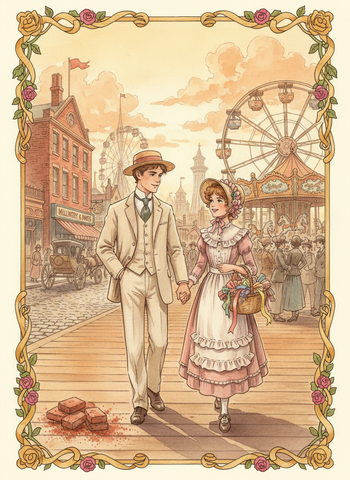
A wealthy idler falls for a millinery girl during a day at Coney Island, only to learn hard truths about why she has to meet men on the street — truths that hit closer to home than he expects.
Blinker was displeased. A man of less culture and poise and wealth would have sworn. But Blinker always remembered that he was a gentleman—a thing that no gentleman should do. So he merely looked bored and sardonic while he rode in a hansom to the center of disturbance, which was the Broadway office of Lawyer Oldport, who was agent for the Blinker estate.
Blinker estaba disgustado. Un hombre de menos cultura, aplomo y fortuna habría soltado un juramento. Pero Blinker siempre recordaba que era un caballero —cosa que ningún caballero debería hacer. Así que se limitó a parecer aburrido y sardónico mientras viajaba en un cabriolé hacia el centro del disturbio, que era la oficina en Broadway del abogado Oldport, apoderado de la hacienda Blinker.
“I don’t see,” said Blinker, “why I should be always signing confounded papers. I am packed, and was to have left for the North Woods this morning. Now I must wait until to-morrow morning. I hate night trains. My best razors are, of course, at the bottom of some unidentifiable trunk. It is a plot to drive me to bay rum and a monologueing, thumb-handed barber. Give me a pen that doesn’t scratch. I hate pens that scratch.”
«No entiendo», dijo Blinker, «por qué he de estar siempre firmando estos malditos papeles. Tengo el equipaje listo y debía haber salido esta mañana hacia los Bosques del Norte. Ahora tendré que esperar hasta mañana por la mañana. Odio los trenes nocturnos. Mis mejores navajas están, por supuesto, en el fondo de algún baúl imposible de identificar. Es un complot para obligarme a usar agua de colonia y a soportar a un barbero charlatán de dedos torpes. Deme una pluma que no rasque. Odio las plumas que rascan.»
“Sit down,” said double-chinned, gray Lawyer Oldport. “The worst has not been told you. Oh, the hardships of the rich! The papers are not yet ready to sign. They will be laid before you to-morrow at eleven. You will miss another day. Twice shall the barber tweak the helpless nose of a Blinker. Be thankful that your sorrows do not embrace a haircut.”
«Siéntate», dijo el abogado Oldport, canoso y de doble papada. «Aún no te he contado lo peor. ¡Ah, las penurias de los ricos! Los papeles todavía no están listos para firmar. Te los presentarán mañana a las once. Perderás otro día. Dos veces el barbero pellizcará la indefensa nariz de un Blinker. Da gracias de que tus penas no incluyan un corte de pelo.»
“If,” said Blinker, rising, “the act did not involve more signing of papers I would take my business out of your hands at once. Give me a cigar, please.”
«Si», dijo Blinker, levantándose, «el asunto no implicara firmar más papeles, sacaría mis negocios de sus manos ahora mismo. Deme un puro, por favor.»
“If,” said Lawyer Oldport, “I had cared to see an old friend’s son gulped down at one mouthful by sharks I would have ordered you to take it away long ago. Now, let’s quit fooling, Alexander. Besides the grinding task of signing your name some thirty times to-morrow, I must impose upon you the consideration of a matter of business—of business, and I may say humanity or right. I spoke to you about this five years ago, but you would not listen—you were in a hurry for a coaching trip, I think. The subject has come up again. The property—”
«Si», dijo el abogado Oldport, «me hubiera importado ver al hijo de un viejo amigo tragado de un solo bocado por los tiburones, te habría ordenado retirar tus negocios hace tiempo. Ahora, dejémonos de tonterías, Alexander. Además de la ardua tarea de firmar tu nombre unas treinta veces mañana, debo imponerte la consideración de un asunto de negocios —de negocios, y podría decir también de humanidad o de justicia. Te hablé de esto hace cinco años, pero no quisiste escuchar; ibas con prisa por un viaje en coche, creo. El asunto ha vuelto a surgir. La propiedad…»
“Oh, property!” interrupted Blinker. “Dear Mr. Oldport, I think you mentioned to-morrow. Let’s have it all at one dose to-morrow—signatures and property and snappy rubber bands and that smelly sealing-wax and all. Have luncheon with me? Well, I’ll try to remember to drop in at eleven to-morrow. Morning.”
«¡Ah, la propiedad!», interrumpió Blinker. «Querido señor Oldport, creo que mencionó usted mañana. Tomémoslo todo de una sola dosis mañana: firmas y propiedad y esas gomitas elásticas quisquillosas y esa cera de sellar maloliente y todo lo demás. ¿Almuerza conmigo? Bueno, trataré de recordar pasar por aquí mañana a las once. Buenos días.»
The Blinker wealth was in lands, tenements and hereditaments, as the legal phrase goes. Lawyer Oldport had once taken Alexander in his little pulmonary gasoline runabout to see the many buildings and rows of buildings that he owned in the city. For Alexander was sole heir. They had amused Blinker very much. The houses looked so incapable of producing the big sums of money that Lawyer Oldport kept piling up in banks for him to spend.
La fortuna de los Blinker estaba en tierras, edificios y demás bienes heredados, como dice la frase legal. El abogado Oldport había llevado una vez a Alexander en su pequeño auto de motor asmático a ver los muchos edificios e hileras de edificios que poseía en la ciudad. Pues Alexander era el único heredero. Aquello había divertido mucho a Blinker. Las casas parecían tan incapaces de producir las grandes sumas de dinero que el abogado Oldport seguía amontonando en los bancos para que él las gastara.
In the evening Blinker went to one of his clubs, intending to dine. Nobody was there except some old fogies playing whist who spoke to him with grave politeness and glared at him with savage contempt. Everybody was out of town. But here he was kept in like a schoolboy to write his name over and over on pieces of paper. His wounds were deep.
Por la tarde Blinker fue a uno de sus clubes, con intención de cenar. No había nadie salvo unos viejos carcamales jugando al whist, que le hablaron con grave cortesía y lo miraron con salvaje desdén. Todo el mundo estaba fuera de la ciudad. Pero a él lo tenían encerrado como a un colegial para escribir su nombre una y otra vez en trozos de papel. Sus heridas eran profundas.
Blinker turned his back on the fogies, and said to the club steward who had come forward with some nonsense about cold fresh salmon roe:
Blinker dio la espalda a los carcamales, y le dijo al mayordomo del club, que se había acercado con alguna tontería sobre huevas de salmón frescas y frías:
“Symons, I’m going to Coney Island.” He said it as one might say: “All’s off; I’m going to jump into the river.”
«Symons, me voy a Coney Island.» Lo dijo como quien podría decir: «Se acabó todo; voy a tirarme al río.»
The joke pleased Symons. He laughed within a sixteenth of a note of the audibility permitted by the laws governing employees.
La broma le agradó a Symons. Se rió dentro del dieciseisavo de una nota, el límite de audibilidad permitido por las leyes que rigen a los empleados.
“Certainly, sir,” he tittered. “Of course, sir, I think I can see you at Coney, Mr. Blinker.”
«Por supuesto, señor», rió entre dientes. «Claro, señor, creo que podré verlo por Coney, señor Blinker.»
Blinker got a paper and looked up the movements of Sunday steamboats. Then he found a cab at the first corner and drove to a North River pier. He stood in line, as democratic as you or I, and bought a ticket, and was trampled upon and shoved forward until, at last, he found himself on the upper deck of the boat staring brazenly at a girl who sat alone upon a camp stool. But Blinker did not intend to be brazen; the girl was so wonderfully good looking that he forgot for one minute that he was the prince incog, and behaved just as he did in society.
Blinker consiguió un periódico y buscó los horarios de los vapores dominicales. Luego encontró un coche en la primera esquina y se dirigió a un muelle del río North. Se puso en fila, tan demócrata como usted o yo, compró un billete, y fue pisoteado y empujado hacia delante hasta que, al fin, se encontró en la cubierta superior del barco, mirando descaradamente a una muchacha que estaba sentada sola en una silla plegable. Pero Blinker no pretendía ser descarado; la muchacha era tan asombrosamente bella que olvidó por un minuto que era el príncipe de incógnito, y se comportó tal como lo hacía en sociedad.
She was looking at him, too, and not severely. A puff of wind threatened Blinker’s straw hat. He caught it warily and settled it again. The movement gave the effect of a bow. The girl nodded and smiled, and in another instant he was seated at her side. She was dressed all in white, she was paler than Blinker imagined milkmaids and girls of humble stations to be, but she was as tidy as a cherry blossom, and her steady, supremely frank gray eyes looked out from the intrepid depths of an unshadowed and untroubled soul.
Ella también lo miraba, y no severamente. Una racha de viento amenazó el sombrero de paja de Blinker. Él lo atrapó con cautela y volvió a colocárselo. El movimiento tuvo el efecto de una reverencia. La muchacha asintió y sonrió, y en otro instante él ya estaba sentado a su lado. Ella iba vestida toda de blanco, era más pálida de lo que Blinker imaginaba que fueran las lecheras y muchachas de condición humilde, pero era tan pulcra como una flor de cerezo, y sus firmes y sumamente francos ojos grises miraban desde las intrépidas profundidades de un alma sin sombras ni turbaciones.
“How dare you raise your hat to me?” she asked, with a smile-redeemed severity.
«¿Cómo se atreve a levantarse el sombrero ante mí?», preguntó ella, con una severidad redimida por la sonrisa.
“I didn’t,” Blinker said, but he quickly covered the mistake by extending it to “I didn’t know how to keep from it after I saw you.”
«No lo hice», dijo Blinker, pero cubrió rápidamente el error añadiendo: «No supe cómo evitarlo después de verla a usted.»
“I do not allow gentlemen to sit by me to whom I have not been introduced,” she said, with a sudden haughtiness that deceived him. He rose reluctantly, but her clear, teasing laugh brought him down to his chair again.
«No permito que se sienten junto a mí caballeros a quienes no he sido presentada», dijo ella, con una repentina altivez que lo engañó. Él se levantó de mala gana, pero la risa clara y burlona de ella lo hizo volver a sentarse.
“I guess you weren’t going far,” she declared, with beauty’s magnificent self-confidence.
«Supongo que no iba usted muy lejos», declaró ella, con la magnífica autoconfianza de la belleza.
“Are you going to Coney Island?” asked Blinker.
«¿Va usted a Coney Island?», preguntó Blinker.
“Me?” She turned upon him wide-open eyes full of bantering surprise. “Why, what a question! Can’t you see that I’m riding a bicycle in the park?” Her drollery took the form of impertinence.
«¿Yo?» Ella se volvió hacia él con los ojos bien abiertos, llenos de sorpresa burlona. «¡Vaya, qué pregunta! ¿No ve que voy en bicicleta por el parque?» Su ocurrencia tomó la forma de la impertinencia.
“And I am laying brick on a tall factory chimney,” said Blinker. “Mayn’t we see Coney together? I’m all alone and I’ve never been there before.”
«Y yo estoy colocando ladrillos en la alta chimenea de una fábrica», dijo Blinker. «¿No podríamos ver Coney juntos? Estoy completamente solo y nunca he estado allí.»
“It depends,” said the girl, “on how nicely you behave. I’ll consider your application until we get there.”
«Depende», dijo la muchacha, «de lo bien que se porte. Consideraré su solicitud hasta que lleguemos.»
Blinker took pains to provide against the rejection of his application. He strove to please. To adopt the metaphor of his nonsensical phrase, he laid brick upon brick on the tall chimney of his devoirs until, at length, the structure was stable and complete. The manners of the best society come around finally to simplicity; and as the girl’s way was that naturally, they were on a mutual plane of communication from the beginning.
Blinker se esmeró en evitar el rechazo de su solicitud. Se esforzó por agradar. Para adoptar la metáfora de su frase disparatada, colocó ladrillo sobre ladrillo en la alta chimenea de sus atenciones hasta que, al fin, la estructura quedó estable y completa. Los modales de la mejor sociedad terminan siempre por llegar a la sencillez; y como el modo natural de la muchacha era ese, estuvieron en un plano mutuo de comunicación desde el principio.
He learned that she was twenty, and her name was Florence; that she trimmed hats in a millinery shop; that she lived in a furnished room with her best chum Ella, who was cashier in a shoe store; and that a glass of milk from the bottle on the window-sill and an egg that boils itself while you twist up your hair makes a breakfast good enough for any one. Florence laughed when she heard “Blinker.”
Él supo que ella tenía veinte años, y que se llamaba Florence; que adornaba sombreros en una sombrerería; que vivía en un cuarto amueblado con su mejor amiga Ella, que era cajera en una zapatería; y que un vaso de leche de la botella en el alféizar y un huevo que se cuece solo mientras te recoges el pelo bastan para hacer un desayuno lo bastante bueno para cualquiera. Florence se rió al oír «Blinker».
“Well,” she said. “It certainly shows that you have imagination. It gives the ‘Smiths’ a chance for a little rest, anyhow.”
«Bueno», dijo. «Ciertamente demuestra que tiene usted imaginación. Al menos les da a los ‘Smith’ la oportunidad de un pequeño descanso.»
They landed at Coney, and were dashed on the crest of a great human wave of mad pleasure-seekers into the walks and avenues of Fairyland gone into vaudeville.
Desembarcaron en Coney, y fueron arrastrados en la cresta de una gran ola humana de buscadores de placer enloquecidos hacia los senderos y avenidas de un País de las Hadas convertido en vodevil.
With a curious eye, a critical mind and a fairly withheld judgment Blinker considered the temples, pagodas and kiosks of popularized delights. Hoi polloi trampled, hustled and crowded him. Basket parties bumped him; sticky children tumbled, howling, under his feet, candying his clothes. Insolent youths strolling among the booths with hard-won canes under one arm and easily won girls on the other, blew defiant smoke from cheap cigars into his face. The publicity gentlemen with megaphones, each before his own stupendous attraction, roared like Niagara in his ears. Music of all kinds that could be tortured from brass, reed, hide or string, fought in the air to gain space for its vibrations against its competitors.
Con ojo curioso, mente crítica y un juicio bastante contenido, Blinker consideró los templos, pagodas y quioscos de las delicias popularizadas. El vulgo lo pisoteaba, lo empujaba y lo agolpaba. Las meriendas familiares chocaban con él; niños pegajosos caían, gritando, bajo sus pies, dejándole la ropa pringosa. Jóvenes insolentes que paseaban entre los puestos con bastones ganados a pulso bajo un brazo y muchachas fácilmente ganadas bajo el otro, le soplaban a la cara humo desafiante de cigarros baratos. Los caballeros de la publicidad con megáfonos, cada uno frente a su propia atracción estupenda, rugían como el Niágara en sus oídos. Toda clase de música que pudiera arrancarse del metal, la caña, el cuero o la cuerda luchaba en el aire por ganar espacio para sus vibraciones contra sus competidoras.
But what held Blinker in awful fascination was the mob, the multitude, the proletariat shrieking, struggling, hurrying, panting, hurling itself in incontinent frenzy, with unabashed abandon, into the ridiculous sham palaces of trumpery and tinsel pleasures. The vulgarity of it, its brutal overriding of all the tenets of repression and taste that were held by his caste, repelled him strongly.
Pero lo que mantenía a Blinker en una fascinación terrible era la muchedumbre, la multitud, el proletariado que chillaba, se agitaba, se apresuraba, jadeaba, se lanzaba en frenesí desenfrenado, con desvergonzado abandono, hacia los ridículos palacios de pacotilla y placeres de oropel. Su vulgaridad, su brutal atropello de todos los preceptos de contención y buen gusto que sostenía su clase, lo repelía con fuerza.
In the midst of his disgust he turned and looked down at Florence by his side. She was ready with her quick smile and upturned, happy eyes, as bright and clear as the water in trout pools. The eyes were saying that they had the right to be shining and happy, for was their owner not with her (for the present) Man, her Gentleman Friend and holder of the keys to the enchanted city of fun?
En medio de su repugnancia se volvió y miró hacia abajo, hacia Florence, a su lado. Ella estaba lista con su sonrisa rápida y sus ojos alegres vueltos hacia arriba, tan brillantes y claros como el agua de las pozas de truchas. Los ojos decían que tenían derecho a brillar y a ser felices, pues ¿no estaba su dueña (por el momento) con su Hombre, su Amigo Caballero y poseedor de las llaves de la ciudad encantada de la diversión?
Blinker did not read her look accurately, but by some miracle he suddenly saw Coney aright.
Blinker no leyó su mirada con exactitud, pero por algún milagro de pronto vio Coney tal como era.
He no longer saw a mass of vulgarians seeking gross joys. He now looked clearly upon a hundred thousand true idealists. Their offenses were wiped out. Counterfeit and false though the garish joys of these spangled temples were, he perceived that deep under the gilt surface they offered saving and apposite balm and satisfaction to the restless human heart. Here, at least, was the husk of Romance, the empty but shining casque of Chivalry, the breath-catching though safe-guarded dip and flight of Adventure, the magic carpet that transports you to the realms of fairyland, though its journey be through but a few poor yards of space.
Ya no vio una masa de vulgares buscando gozos groseros. Ahora miraba con claridad a cien mil verdaderos idealistas. Sus ofensas quedaban borradas. Por falsas y fingidas que fueran las alegrías chillonas de aquellos templos lentejuelados, percibió que bajo la superficie dorada ofrecían un bálsamo salvador y apropiado, y satisfacción, al inquieto corazón humano. Aquí, al menos, estaba la cáscara del Romance, el casco vacío pero reluciente de la Caballería, la vertiginosa aunque segura zambullida y vuelo de la Aventura, la alfombra mágica que te transporta a los reinos de las hadas, aunque su viaje transcurra por apenas unos pocos y pobres metros de espacio.
He no longer saw a rabble, but his brothers seeking the ideal. There was no magic of poesy here or of art; but the glamour of their imagination turned yellow calico into cloth of gold and the megaphones into the silver trumpets of joy’s heralds.
Ya no vio una chusma, sino a sus hermanos buscando el ideal. No había allí magia de poesía ni de arte; pero el hechizo de su imaginación convertía la calicó amarilla en tela de oro y los megáfonos en las trompetas de plata de los heraldos de la alegría.
Almost humbled, Blinker rolled up the shirt sleeves of his mind and joined the idealists.
Casi humillado, Blinker se remangó las mangas de la mente y se unió a los idealistas.
“You are the lady doctor,” he said to Florence. “How shall we go about doing this jolly conglomeration of fairy tales, incorporated?”
«Es usted la doctora», le dijo a Florence. «¿Cómo debemos abordar todo este alegre conglomerado de cuentos de hadas, incorporado?»
“We will begin there,” said the Princess, pointing to a fun pagoda on the edge of the sea, “and we will take them all in, one by one.”
«Empezaremos por allí», dijo la Princesa, señalando una pagoda de diversiones al borde del mar, «y los iremos recorriendo todos, uno por uno.»
They caught the eight o’clock returning boat and sat, filled with pleasant fatigue, against the rail in the bow, listening to the Italians’ fiddle and harp. Blinker had thrown off all care. The North Woods seemed to him an uninhabitable wilderness. What a fuss he had made over signing his name—pooh! he could sign it a hundred times. And her name was as pretty as she was—“Florence,” he said it to himself a great many times.
Tomaron el barco de las ocho que regresaba y se sentaron, llenos de una placentera fatiga, contra la barandilla en la proa, escuchando el violín y el arpa de los italianos. Blinker había echado a un lado toda preocupación. Los Bosques del Norte le parecían ahora un páramo inhabitable. Qué alboroto había hecho por firmar su nombre… ¡bah! podía firmarlo cien veces. Y el nombre de ella era tan bonito como ella misma —«Florence», se lo repitió a sí mismo muchas veces.
As the boat was nearing its pier in the North River a two-funnelled, drab, foreign-looking sea-going steamer was dropping down toward the bay. The boat turned its nose in toward its slip. The steamer veered as if to seek midstream, and then yawed, seemed to increase its speed and struck the Coney boat on the side near the stern, cutting into it with a terrifying shock and crash.
Cuando el barco se acercaba a su muelle en el río North, un vapor marino de dos chimeneas, de color pardo y aspecto extranjero, bajaba hacia la bahía. El barco viró la proa hacia su atracadero. El vapor se desvió como buscando la corriente central, y luego dio un bandazo, pareció aumentar su velocidad y golpeó al barco de Coney por el costado, cerca de la popa, cortándolo con un choque y un estruendo aterradores.
While the six hundred passengers on the boat were mostly tumbling about the decks in a shrieking panic the captain was shouting at the steamer that it should not back off and leave the rent exposed for the water to enter. But the steamer tore its way out like a savage sawfish and cleaved its heartless way, full speed ahead.
Mientras los seiscientos pasajeros del barco caían en su mayoría sobre las cubiertas en pánico chillón, el capitán le gritaba al vapor que no diera marcha atrás y dejara la brecha expuesta para que entrara el agua. Pero el vapor se abrió paso como un salvaje pez sierra y siguió su rumbo despiadado, a toda máquina.
The boat began to sink at its stern, but moved slowly toward the slip. The passengers were a frantic mob, unpleasant to behold.
El barco empezó a hundirse por la popa, pero se movía lentamente hacia el atracadero. Los pasajeros formaban una turba enloquecida, desagradable de contemplar.
Blinker held Florence tightly until the boat had righted itself. She made no sound or sign of fear. He stood on a camp stool, ripped off the slats above his head and pulled down a number of the life preservers. He began to buckle one around Florence. The rotten canvas split and the fraudulent granulated cork came pouring out in a stream. Florence caught a handful of it and laughed gleefully.
Blinker sostuvo a Florence con fuerza hasta que el barco se enderezó. Ella no dio ninguna muestra ni sonido de miedo. Él se subió a una silla plegable, arrancó las tablillas sobre su cabeza y bajó varios chalecos salvavidas. Empezó a abrochar uno alrededor de Florence. La lona podrida se rasgó y el corcho granulado y fraudulento salió a chorros. Florence atrapó un puñado y se rió con alegría.
“It looks like breakfast food,” she said. “Take it off. They’re no good.”
«Parece cereal de desayuno», dijo. «Quíteselo. No sirven para nada.»
She unbuckled it and threw it on the deck. She made Blinker sit down and sat by his side and put her hand in his. “What’ll you bet we don’t reach the pier all right?” she said and began to hum a song.
Ella se lo desabrochó y lo tiró a la cubierta. Hizo que Blinker se sentara y se sentó a su lado y le puso la mano en la suya. «¿Qué apuesta a que no llegamos bien al muelle?», dijo, y empezó a tararear una canción.
And now the captain moved among the passengers and compelled order. The boat would undoubtedly make her slip, he said, and ordered the women and children to the bow, where they could land first. The boat, very low in the water at the stern, tried gallantly to make his promise good.
Y entonces el capitán se movió entre los pasajeros e impuso orden. El barco sin duda alcanzaría su atracadero, dijo, y ordenó que las mujeres y los niños fueran a la proa, donde podrían desembarcar primero. El barco, muy hundido en el agua por la popa, intentó valientemente cumplir su promesa.
“Florence,” said Blinker, as she held him close by an arm and hand, “I love you.”
«Florence», dijo Blinker, mientras ella lo sujetaba cerca con un brazo y una mano, «la amo.»
“That’s what they all say,” she replied, lightly.
«Eso es lo que dicen todos», respondió ella, con ligereza.
“I am not one of ‘they all,’” he persisted. “I never knew any one I could love before. I could pass my life with you and be happy every day. I am rich. I can make things all right for you.”
«Yo no soy uno de ‘todos’», insistió él. «Nunca conocí a nadie a quien pudiera amar antes. Podría pasar mi vida con usted y ser feliz cada día. Soy rico. Puedo arreglarle las cosas.»
“That’s what they all say,” said the girl again, weaving the words into her little, reckless song.
«Eso es lo que dicen todos», dijo la muchacha de nuevo, tejiendo las palabras en su cancioncilla despreocupada.
“Don’t say that again,” said Blinker in a tone that made her look at him in frank surprise.
«No vuelva a decir eso», dijo Blinker en un tono que la hizo mirarlo con franca sorpresa.
“Why shouldn’t I say it?” she asked calmly. “They all do.”
«¿Por qué no habría de decirlo?», preguntó ella con calma. «Todos lo dicen.»
“Who are ‘they’?” he asked, jealous for the first time in his existence.
«¿Quiénes son ‘todos’?», preguntó él, celoso por primera vez en su existencia.
“Why, the fellows I know.”
«Pues, los muchachos que conozco.»
“Do you know so many?”
«¿Conoce a tantos?»
“Oh, well, I’m not a wall flower,” she answered with modest complacency.
«Bueno, no soy ninguna solterona de rincón», respondió ella con modesta complacencia.
“Where do you see these—these men? At your home?”
«¿Dónde ve usted a estos… a estos hombres? ¿En su casa?»
“Of course not. I meet them just as I did you. Sometimes on the boat, sometimes in the park, sometimes on the street. I’m a pretty good judge of a man. I can tell in a minute if a fellow is one who is likely to get fresh.”
«Claro que no. Los encuentro tal como lo encontré a usted. A veces en el barco, a veces en el parque, a veces en la calle. Soy bastante buena juzgando a un hombre. Sé en un minuto si un tipo es de los que probablemente se propasen.»
“What do you mean by ‘fresh?’”
«¿Qué quiere decir con ‘propasarse’?»
“Why, try to kiss you—me, I mean.”
«Pues, tratar de besarla a una… a mí, quiero decir.»
“Do any of them try that?” asked Blinker, clenching his teeth.
«¿Alguno de ellos lo intenta?», preguntó Blinker, apretando los dientes.
“Sure. All men do. You know that.”
«Claro. Todos los hombres lo hacen. Usted lo sabe.»
“Do you allow them?”
«¿Se lo permite?»
“Some. Not many. They won’t take you out anywhere unless you do.”
«Algunos. No muchos. No la llevan a ninguna parte si una no lo hace.»
She turned her head and looked searchingly at Blinker. Her eyes were as innocent as a child’s. There was a puzzled look in them, as though she did not understand him.
Ella volvió la cabeza y miró a Blinker con ojos escrutadores. Sus ojos eran tan inocentes como los de una niña. Había en ellos una mirada de desconcierto, como si no lo entendiera.
“What’s wrong about my meeting fellows?” she asked, wonderingly.
«¿Qué tiene de malo que me encuentre con muchachos?», preguntó, extrañada.
“Everything,” he answered, almost savagely. “Why don’t you entertain your company in the house where you live? Is it necessary to pick up Tom, Dick and Harry on the streets?”
«Todo», respondió él, casi con furia. «¿Por qué no recibe a sus visitas en la casa donde vive? ¿Es necesario recoger a cualquiera en la calle?»
She kept her absolutely ingenuous eyes upon his. “If you could see the place where I live you wouldn’t ask that. I live in Brickdust Row. They call it that because there’s red dust from the bricks crumbling over everything. I’ve lived there for more than four years. There’s no place to receive company. You can’t have anybody come to your room. What else is there to do? A girl has got to meet the men, hasn’t she?”
Ella mantuvo sus ojos absolutamente ingenuos fijos en los de él. «Si pudiera ver el lugar donde vivo, no preguntaría eso. Vivo en Brickdust Row. Le llaman así porque hay polvo rojo de los ladrillos desmoronándose sobre todo. He vivido allí más de cuatro años. No hay ningún sitio para recibir visitas. No se puede hacer que alguien venga a tu cuarto. ¿Qué más se puede hacer? Una muchacha tiene que encontrarse con los hombres, ¿no es así?»
“Yes,” he said, hoarsely. “A girl has got to meet a—has got to meet the men.”
«Sí», dijo él, con voz ronca. «Una muchacha tiene que encontrarse con… tiene que encontrarse con los hombres.»
“The first time one spoke to me on the street,” she continued, “I ran home and cried all night. But you get used to it. I meet a good many nice fellows at church. I go on rainy days and stand in the vestibule until one comes up with an umbrella. I wish there was a parlor, so I could ask you to call, Mr. Blinker—are you really sure it isn’t ‘Smith,’ now?”
«La primera vez que uno me habló en la calle», continuó ella, «corrí a casa y lloré toda la noche. Pero una se acostumbra. Encuentro a bastantes muchachos agradables en la iglesia. Voy los días de lluvia y me quedo en el vestíbulo hasta que alguien se acerca con un paraguas. Ojalá hubiera una sala de recibo, para poder invitarlo a que me visite, señor Blinker… ¿de veras está seguro de que no se apellida ‘Smith’?»
The boat landed safely. Blinker had a confused impression of walking with the girl through quiet crosstown streets until she stopped at a corner and held out her hand.
El barco atracó sin novedad. Blinker tenía una impresión confusa de haber caminado con la muchacha por tranquilas calles transversales hasta que ella se detuvo en una esquina y le tendió la mano.
“I live just one more block over,” she said. “Thank you for a very pleasant afternoon.”
«Vivo una manzana más allá», dijo. «Gracias por una tarde muy agradable.»
Blinker muttered something and plunged northward till he found a cab. A big, gray church loomed slowly at his right. Blinker shook his fist at it through the window.
Blinker murmuró algo y se lanzó hacia el norte hasta encontrar un coche. Una gran iglesia gris se alzó lentamente a su derecha. Blinker le mostró el puño por la ventanilla.
“I gave you a thousand dollars last week,” he cried under his breath, “and she meets them in your very doors. There is something wrong; there is something wrong.”
«Le di mil dólares la semana pasada», exclamó entre dientes, «y ella los encuentra en tus propias puertas. Hay algo mal; hay algo mal.»
At eleven the next day Blinker signed his name thirty times with a new pen provided by Lawyer Oldport.
A las once del día siguiente, Blinker firmó su nombre treinta veces con una pluma nueva que le proporcionó el abogado Oldport.
“Now let me go to the woods,” he said surlily.
«Ahora déjeme ir al bosque», dijo de mal humor.
“You are not looking well,” said Lawyer Oldport. “The trip will do you good. But listen, if you will, to that little matter of business of which I spoke to you yesterday, and also five years ago. There are some buildings, fifteen in number, of which there are new five-year leases to be signed. Your father contemplated a change in the lease provisions, but never made it. He intended that the parlors of these houses should not be sub-let, but that the tenants should be allowed to use them for reception rooms.”
«No se ve usted bien», dijo el abogado Oldport. «El viaje le hará bien. Pero escuche, si quiere, ese pequeño asunto de negocios del que le hablé ayer, y también hace cinco años. Hay unos edificios, quince en total, para los cuales hay que firmar nuevos arrendamientos de cinco años. Su padre pensaba hacer un cambio en las condiciones del arriendo, pero nunca llegó a hacerlo. Su intención era que las salas de estas casas no se subarrendaran, sino que se permitiera a los inquilinos usarlas como salas de recibo.»
“These houses are in the shopping district, and are mainly tenanted by young working girls. As it is they are forced to seek companionship outside. This row of red brick—”
«Estas casas están en el distrito comercial, y en su mayoría las habitan jóvenes obreras. Tal como están las cosas, se ven obligadas a buscar compañía fuera. Esta hilera de ladrillo rojo…»
Blinker interrupted him with a loud, discordant laugh.
Blinker lo interrumpió con una risa fuerte y discordante.
“Brickdust Row for an even hundred,” he cried. “And I own it. Have I guessed right?”
«Brickdust Row, en números redondos», exclamó. «Y es mía. ¿Acerté?»
“The tenants have some such name for it,” said Lawyer Oldport.
«Los inquilinos tienen algún nombre así para ella», dijo el abogado Oldport.
Blinker arose and jammed his hat down to his eyes.
Blinker se levantó y se encasquetó el sombrero hasta los ojos.
“Do what you please with it,” he said harshly. “Remodel it, burn it, raze it to the ground. But, man, it’s too late I tell you. It’s too late. It’s too late. It’s too late.”
«Haga con ella lo que quiera», dijo con aspereza. «Remodélela, quémela, arrásela hasta los cimientos. Pero, hombre, es demasiado tarde, se lo digo. Es demasiado tarde. Es demasiado tarde. Es demasiado tarde.»
